


What is Borderline Personality Disorder (BPD)? Symptoms, causes & treatment
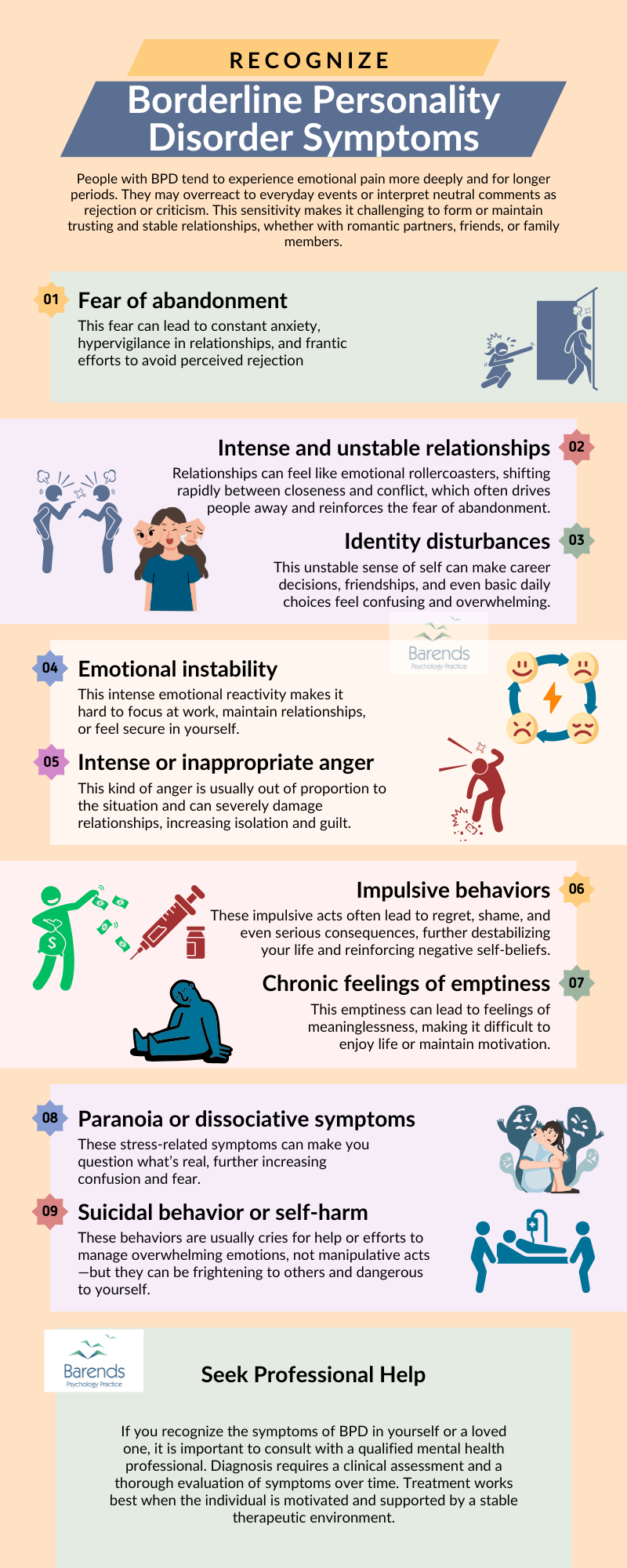
Borderline personality disorder infographic.
Borderline Personality Disorder (BPD) is a complex and often misunderstood mental health condition characterized by intense emotional instability, impulsive behavior, a fragile sense of identity, and a persistent fear of abandonment. People living with BPD frequently experience rapid emotional shifts that can make everyday situations feel overwhelming and unpredictable. As a result, maintaining stable relationships, managing stress, and regulating emotions can become extremely challenging.
Individuals with BPD often react strongly to perceived rejection or criticism, even when no harm is intended. These reactions may lead to patterns of conflict, emotional outbursts, or impulsive decisions that later cause regret. Over time, these cycles can create instability in friendships, romantic relationships, work environments, and self-esteem. Many people with BPD also struggle with chronic feelings of emptiness, identity confusion, and difficulty trusting others.
Understanding the condition is an important first step toward recovery. On this page, we explain the core features of Borderline Personality Disorder, including common symptoms of BPD, potential causes of borderline personality disorder, and the most effective treatment approaches for BPD. If you are wondering whether these patterns apply to you, you can also take our Borderline Personality Disorder screening test.
Key Facts About Borderline Personality Disorder
- BPD affects an estimated 1.6% to 5.9% of the general population.
- It is often diagnosed more frequently in women, although recent research suggests it may be equally prevalent in men.
- Symptoms usually begin in late adolescence or early adulthood.
- BPD is often associated with early trauma, neglect, or unstable caregiving environments.
- Common comorbid disorders include depression, PTSD, anxiety disorders, eating disorders, and substance use disorders.
People with Borderline Personality Disorder (BPD) often go to great lengths to avoid real or imagined abandonment. This fear of rejection can lead to emotionally intense or self-destructive behaviors, such as starting arguments, threatening self-harm, or making frantic efforts to prevent someone from leaving. Ironically, these behaviors often push others away, reinforcing the person’s fear of being alone and creating a painful, self-perpetuating cycle.
Common symptoms of BPD include unstable relationships, identity disturbance, impulsive or reckless behavior, emotional instability, chronic feelings of emptiness, and poorly controlled anger. Some individuals also experience temporary stress-related paranoia or dissociative symptoms. Together, these patterns can cause significant distress and interfere with daily functioning, relationships, and self-esteem.
— Niels Barends, MSc, psychologist at Barends Psychology Practice
How BPD patterns maintain themselves (The feedback loop)
One of the most important aspects of Borderline Personality Disorder is that the symptoms are not random. They tend to form a self-reinforcing pattern, often referred to as a feedback loop. This loop helps explain why the same relationship difficulties and emotional reactions can repeat over time, even when someone is trying to change.
A simplified version of this pattern looks like this:
- A trigger occurs (e.g., perceived rejection or distance)
- This is interpreted as abandonment or threat
- Emotions escalate rapidly (fear, anger, panic, emptiness)
- A strong reaction follows (e.g., withdrawal, anger, reassurance seeking, impulsive behavior)
- The situation becomes more unstable (conflict, distance, regret)
- This reinforces the original fear: “People leave me”
Although these reactions are often attempts to protect oneself from emotional pain, they can unintentionally create the very outcomes they are trying to prevent. For example, seeking constant reassurance or reacting intensely may push others away, which then strengthens the fear of abandonment. This pattern becomes more automatic. The brain begins to anticipate rejection even in neutral situations, increasing emotional sensitivity and making it harder to respond calmly.
Understanding this feedback loop is an important step, because it shows that BPD is not simply about “intense emotions,” but about how those emotions and behaviors interact over time (learn more about underlying causes of BPD).
Effective treatment focuses on breaking this cycle. Instead of reacting automatically, therapy helps create space between trigger and response, allowing new, more stable patterns to develop (see BPD treatment options).
Clinical insight:
In therapy, many clients already recognize parts of this loop once it is explained. What often becomes clear is not just how intense the emotions are, but how quickly reactions follow from them. Learning to slow down this process, even slightly, is often the first step toward meaningful change.
Niels Barends, MSc
Psychologist specialized in personality disorders
Evidence-based treatments for Borderline Personality Disorder
Is There Hope for People With BPD?
Yes, absolutely. Although BPD can be deeply disruptive, effective treatments are available. Dialectical Behavior Therapy (DBT) and Schema Therapy are two evidence-based approaches that have shown strong results in helping individuals with BPD lead more stable and fulfilling lives. With the right therapeutic support, many people see significant improvement in how they handle emotions, build relationships, and view themselves.
— Niels Barends, MSc, psychologist at Barends Psychology Practice
Borderline Personality Disorder Guide
What are the symptoms of Borderline Personality Disorder?
Borderline Personality Disorder can affect how a person experiences emotions, relationships, identity, and stress. Symptoms often begin in adolescence or early adulthood and may become stronger during periods of rejection, conflict, abandonment fear, or emotional pressure.
Common symptoms of BPD include:
- Intense fear of abandonment, whether real or imagined
- Unstable or emotionally intense relationships
- Rapid mood changes and strong emotional reactions
- Unclear or unstable sense of identity
- Impulsive or self-destructive behavior
- Chronic feelings of emptiness
- Intense anger or difficulty controlling anger
- Self-harm, suicidal thoughts, or suicidal behavior
- Stress-related paranoia or dissociation
These symptoms often overlap and reinforce each other. For example, fear of abandonment may lead to reassurance seeking, anger, withdrawal, or impulsive reactions, which can then create more conflict and emotional instability.
For a more detailed explanation with examples, read our full guide to
borderline personality disorder symptoms.
Wondering if these symptoms apply to you?
You can take our free Borderline Personality Disorder screening test to better understand whether BPD traits may be affecting your emotional patterns and relationships.
Why BPD relationship patterns can look different from person to person
Although Borderline Personality Disorder is defined by specific diagnostic criteria, the way relationship difficulties appear can differ greatly from person to person. One person may seek reassurance when they feel abandoned, while another may withdraw to regain control of the situation. These differences do not mean that BPD has different “types.” Rather, they show that the same core fear, such as rejection or feeling misunderstood, can be expressed through different relational patterns.
The Relational Archetypes provide a non-diagnostic way to understand these recurring patterns. They do not diagnose BPD and should not replace a clinical assessment. Instead, they can help illustrate how emotional needs and conflict responses may differ between individuals and couples.
Relational Archetypes and BPD relationship patterns
| Relational Archetype | Need in stable moments | Possible response under BPD-related stress |
|---|---|---|
| Attuner | Emotional closeness, feeling understood | May become highly sensitive to distance or seek repeated reassurance. |
| Catalyst | Movement, growth | May escalate quickly when the relationship feels stuck. |
| Observer | Reflection, emotional processing time | May withdraw or overthink during conflict. |
| Anchor | Security, emotional steadiness | May become anxious when routines or relational expectations feel unstable. |
| Builder | Reliability, shared responsibility | May focus on fixing or proving commitment through action while missing the emotional need underneath. |
Example: An Attuner and an Observer
Imagine someone with strong Attuner patterns who feels emotionally unsafe after their partner becomes quiet. Their deeper need may be simple:
“I need to know we are still okay.”
If their partner has stronger Observer patterns, they may need space before talking. Their silence may not mean rejection. It may mean:
“I need time to understand what I feel before I can respond.”
This is where the cycle can begin. The Attuner experiences silence as abandonment and asks for reassurance. The Observer experiences the reassurance-seeking as pressure and withdraws further. The more one partner reaches, the more the other retreats. Both are trying to feel safe, but their strategies intensify the other person’s fear.
In BPD-related relationship stress, this cycle may become especially painful because emotional signals are interpreted quickly and intensely. A delay in response or a moment of distance may feel much larger than intended. Understanding the pattern helps shift the conversation from blame to need. Instead of “you are too needy” or “you are too distant,” the couple can begin asking:
“What does this reaction protect you from?”
That question creates space for a different response. The Attuner may learn to ask for reassurance more directly, while the Observer may learn to communicate their need for space without disappearing emotionally.
Recognizing these patterns can support therapy and communication. However, BPD diagnosis and treatment should always be guided by a qualified mental health professional.
Why do you keep having the same relationship problems?
Many people assume relationship difficulties are caused by specific situations or partners. Yet the same patterns often reappear across different relationships because the underlying emotional needs remain the same. The Relational Archetype assessment helps identify the pattern that shapes how you experience conflict and emotional closeness. Understanding your pattern is often the first step toward changing it.
Treatment Options for BPD
Although BPD can feel overwhelming, effective treatment is available. At Barends Psychology Practice, we emphasize that individuals with BPD can absolutely recover and lead fulfilling lives. Two of the most evidence-based treatment modalities are Dialectical Behavior Therapy (DBT) and Schema Therapy. DBT helps individuals develop skills for emotion regulation, distress tolerance, mindfulness, and interpersonal effectiveness. Schema Therapy focuses on uncovering and healing maladaptive schemas that stem from unmet emotional needs in early life.
Therapy for BPD is usually long-term and requires a strong therapeutic alliance, but research consistently shows that symptoms can significantly improve with consistent treatment. Many individuals report enhanced emotional control, better relationships, and an improved sense of self after several months of therapy. You can read more about therapy options on the page about borderline personality disorder treatment.
Related conditions and overlapping symptoms
People with Borderline Personality Disorder (BPD) may also experience symptoms associated with PTSD and Complex PTSD, especially when there is a history of chronic trauma, emotional neglect, or unstable attachment experiences. Emotional dysregulation in BPD can also overlap with anxiety disorders,
depression, and dissociative symptoms.
In daily life, these overlapping symptoms may affect emotional stability, identity, trust, and relationships. Some people also develop coping patterns related to attachment trauma, disordered eating, or recurring
relationship problems. Understanding these overlaps can help clarify whether symptoms are mainly related to BPD, trauma, anxiety, or a combination of different patterns.
- PTSD and Complex PTSD
- Anxiety disorders
- Depression
- Dissociation
- Attachment trauma
- Eating disorders
- Relationship problems
Living with BPD: Challenges and Coping
Living with BPD often means grappling with intense emotional reactions and difficulty maintaining balance in life. This emotional dysregulation can lead to impulsive actions, such as substance abuse, binge eating, or reckless spending, which may temporarily relieve pain but often increase distress in the long run. People with BPD may also experience deep shame and guilt following these episodes, creating a vicious cycle.
At Barends Psychology Practice, we help clients identify their emotional triggers and replace self-destructive coping strategies with healthier alternatives. Emotion regulation, self-compassion, and developing a stable sense of identity are all critical goals in the healing process.
Family members and loved ones of someone with BPD may feel overwhelmed, confused, or emotionally drained. Psychoeducation, couples therapy, or family counseling can be extremely helpful in improving communication and reducing misunderstandings. Understanding that the behaviors are symptoms, not intentional cruelty, is key to supporting someone with BPD.
When to Seek Professional Help
If you recognize the symptoms of Borderline Personality Disorder in yourself or someone close to you, it may be helpful to consult a qualified mental health professional. A proper diagnosis requires a structured clinical assessment and careful evaluation of symptoms over time.
With appropriate treatment and support, many individuals with BPD learn to regulate their emotions more effectively, build healthier relationships, and regain a stronger sense of stability in daily life.
At Barends Psychology Practice, we provide both in-person and online therapy for Borderline Personality Disorder using evidence-based approaches such as Schema Therapy and Cognitive Behavioural Therapy (CBT).
Frequently Asked Questions About Borderline Personality Disorder
Can Borderline Personality Disorder be treated successfully?
Yes. Borderline Personality Disorder can improve significantly with appropriate treatment. Many people with BPD learn to regulate their emotions more effectively, reduce impulsive behavior, improve their relationships, and develop a more stable sense of self. Evidence-based approaches such as Dialectical Behavior Therapy (DBT), Schema Therapy, and Mentalization-Based Therapy (MBT) have shown strong results. Recovery usually takes time, but meaningful improvement is absolutely possible.
What are the main symptoms of Borderline Personality Disorder?
The main symptoms of BPD often include an intense fear of abandonment, unstable relationships, rapid emotional shifts, impulsive behavior, identity disturbance, chronic feelings of emptiness, intense anger, and in some cases self-harm or suicidal behavior. Some people also experience temporary paranoia or dissociation during periods of stress. Not everyone shows the same pattern, which is why BPD can look different from person to person.
What causes Borderline Personality Disorder?
There is usually no single cause. Borderline Personality Disorder is often associated with a combination of factors, including emotional sensitivity, early trauma, neglect, invalidating environments, attachment disruptions, and sometimes genetic vulnerability. Many people with BPD grew up in situations where their emotions were not understood, soothed, or responded to consistently. Over time, this can affect emotional regulation, self-image, and trust in relationships. Research suggests that early trauma, attachment disruptions, and emotionally invalidating environments may contribute to the development of BPD. You can read more about these factors on the page about borderline personality disorder causes. In some cases, prolonged relational trauma can contribute to symptoms similar to complex PTSD.
How is Borderline Personality Disorder diagnosed?
Borderline Personality Disorder is diagnosed through a clinical assessment by a qualified mental health professional. This usually involves discussing long-term patterns in emotions, behavior, relationships, identity, and coping. A clinician will also consider whether the symptoms are better explained by another condition, such as bipolar disorder, complex trauma, ADHD, substance use, or depression. A diagnosis should never be based on one symptom alone or on an online test by itself.
Is Borderline Personality Disorder the same as bipolar disorder?
No. Although the two conditions can overlap in some ways, they are not the same. Bipolar disorder primarily involves episodes of depression and mania or hypomania that usually last for days or longer. In BPD, emotional shifts are often more rapid and closely linked to interpersonal stress, perceived rejection, or fear of abandonment. Because the symptoms can sometimes look similar, a careful professional assessment is important.
Can someone with Borderline Personality Disorder have healthy relationships?
Yes, healthy and stable relationships are possible. However, they often require self-awareness, emotional regulation skills, and a willingness to work on communication and boundaries. Partners and family members may also benefit from psychoeducation or counseling so they can better understand the emotional patterns involved. With treatment and support, many people with BPD build stronger, calmer, and more secure relationships over time.
When should someone seek professional help for BPD?
It is wise to seek professional help when emotional instability, relationship problems, impulsive behavior, self-harm, or chronic emptiness begin to interfere with daily life. The earlier someone receives appropriate support, the greater the chance of reducing distress and building healthier coping patterns. Professional help is especially important when there are thoughts of self-harm, suicidal feelings, repeated crises in relationships, or difficulty functioning at work, in study, or at home.
(Advertisement. For more information, continue reading.)
Psychologist with more than 14 years of clinical experience treating trauma, personality disorders, and complex relationship dynamics.
Specialized in Schema Therapy, Cognitive Behavioural Therapy (CBT), and EMDR.
Founder of Barends Psychology.
Last reviewed: May 2026
References
The information on this page is based on established clinical guidelines and peer-reviewed research on
borderline personality disorder (BPD), including diagnostic frameworks, epidemiology, and evidence-based treatment approaches.
- American Psychiatric Association. (2022).
Diagnostic and Statistical Manual of Mental Disorders (DSM-5-TR). - World Health Organization. (2019).
International Classification of Diseases (ICD-11). - Gunderson, J. G. (2011).
Borderline Personality Disorder. New England Journal of Medicine, 364(21), 2037–2042. - Linehan, M. M. (1993).
Cognitive-Behavioral Treatment of Borderline Personality Disorder. Guilford Press. - Bateman, A., & Fonagy, P. (2004).
Psychotherapy for Borderline Personality Disorder: Mentalization-Based Treatment. Oxford University Press. - Arntz, A., & van Genderen, H. (2009).
Schema Therapy for Borderline Personality Disorder. Wiley-Blackwell. - Leichsenring, F., Leibing, E., Kruse, J., New, A. S., & Leweke, F. (2011).
Borderline personality disorder. The Lancet, 377(9759), 74–84.