


Relational Archetypes: The 5 communication styles in relationships
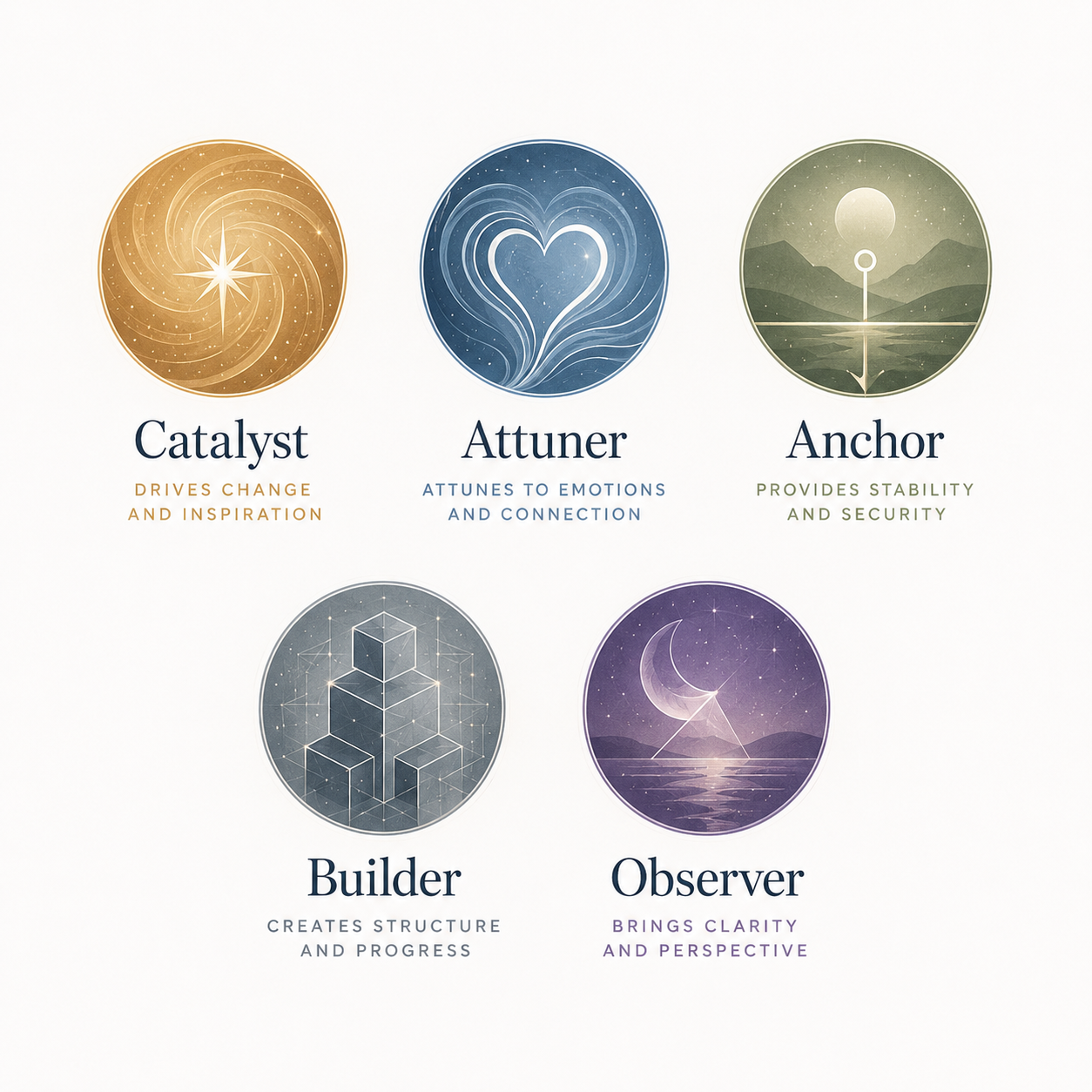
Why do some people immediately want to talk things through after an argument, while others need time and space to think? Why does one partner seek reassurance when something feels wrong, while another focuses on finding a solution or restoring stability?
After more than 14 years of clinical experience working with couples, I noticed that many relationship struggles follow surprisingly similar patterns. While the topics may differ, the underlying dynamics often repeat themselves. People tend to approach connection, conflict, emotional needs, and communication in distinct ways.
This observation led to the development of the 5 Relational Archetypes, adapted from The 20–80 Method. Each archetype represents a different way of creating connection and responding when relationships become challenging.
Understanding your relational archetype can help you recognize recurring patterns in your relationships, improve communication, better understand your strengths and blind spots, and gain insight into how your partner experiences connection. Many relationship difficulties become easier to navigate once these underlying patterns are visible.
What are relational archetypes?
People differ not only in personality, but also in how they approach relationships. Some naturally focus on emotional connection. Others seek stability or understanding. These differences often shape how people show up when a relationship feels uncertain.
Relational archetypes provide a framework for understanding the deeper tendencies that influence how we connect with others. They help explain why certain relationship situations feel effortless, while others repeatedly create tension or misunderstanding.
Most people are influenced by more than one archetype. Typically, one pattern is dominant, while another shapes how that pattern is expressed. Together, these archetypes create a unique relational style that influences how someone communicates and responds when relationships come under pressure.

Overview of the 5 Relational Archetypes
| Archetype | Core Focus | Strength | Potential Challenge |
|---|---|---|---|
| Catalyst | Growth and future direction | Drives development and meaningful conversations | May push too much for change |
| Attuner | Emotional connection | Creates emotional safety and empathy | May become overly focused on emotional distance |
| Builder | Stability and action | Provides reliability and practical solutions | May appear emotionally distant |
| Observer | Analysis and reflection | Brings clarity and insight | May overanalyze and delay communication |
| Anchor | Structure and long-term stability | Builds strong foundations | May become rigid or controlling |
Discover your Relational Archetype
Take the free Relational Archetype assessment to discover your dominant relational pattern and receive your personalized archetype results.
The 5 Relational Archetypes and heir communication Styles
The five relational archetypes each represent a different way people tend to approach relationships, communication, emotional safety, and stress. Most people recognize parts of themselves in several archetypes, but usually one or two patterns stand out more strongly.

1. The Catalyst
“I want us to grow, not stay stuck.”
Catalysts bring possibility and movement into relationships. They notice what could improve and often push for growth before others feel ready.
- You quickly see what could be better
- You feel restless when the relationship feels stuck
- You want honest conversations about growth
- You may push too hard for change
- You may become impatient with hesitation
- You may overlook what already works
Learn to create movement without making your partner feel rushed or inadequate.

2. The Attuner
“I need to feel that we are emotionally okay.”
Attuners are highly aware of emotional connection. They notice shifts in tone, warmth, closeness, and distance, often before these changes are spoken about directly.
You may recognize this if…
- You quickly sense when something feels different
- You want emotional issues talked through
- You feel unsettled when connection feels unclear
Under pressure…
- You may seek reassurance repeatedly
- You may revisit the same concern many times
- You may struggle to let emotional distance pass
Growth focus
Stay connected without needing every uncertainty to be resolved immediately.

3. The Builder
“I show love by showing up.”
Builders create connection through reliability, commitment, and practical support. They often express care by taking responsibility and helping the relationship function.
You may recognize this if…
- You show care through actions more than words
- You value loyalty, responsibility, and follow-through
- You want the relationship to feel dependable
Under pressure…
- You may focus on fixing instead of feeling
- You may become rigid about responsibilities
- You may seem distant when you are trying to help
Growth focus
Balance practical support with emotional presence and openness.

4. The Observer
“I need time to understand what is happening.”
Observers bring reflection, perspective, and careful understanding into relationships. They often prefer to process internally before speaking or reacting.
You may recognize this if…
- You need time before responding emotionally
- You want to understand the pattern behind conflict
- You dislike being pushed to react immediately
Under pressure…
- You may withdraw into analysis
- You may delay difficult conversations
- Your silence may be experienced as distance
Growth focus
Communicate your need for time without disappearing emotionally.

5. The Anchor
“I need to know this relationship is safe and steady.”
Anchors bring stability, loyalty, and emotional steadiness into relationships. They often help others feel grounded when life becomes uncertain or stressful.
You may recognize this if…
- You value consistency and emotional safety
- You feel uneasy when things become unpredictable
- You try to keep the relationship stable
Under pressure…
- You may become rigid or controlling
- You may resist change when you feel unsafe
- You may hold on too tightly to what feels familiar
Growth focus
Create stability without trying to control every uncertainty.