


Somatic Symptom Disorder Symptoms: Signs, Examples & When to Seek Help
Written by Niels Barends, MSc, psychologist with more than 14 years of clinical experience treating anxiety, trauma-related symptoms, emotional dysregulation, and somatic symptom disorder. Updated May 2026.
Somatic symptom disorder symptoms include distressing physical complaints combined with persistent worry, body monitoring, reassurance seeking, avoidance, or significant disruption in daily life. The physical symptoms are real, but they become clinically important when they are strongly connected to emotional distress and health-related anxiety.
People with somatic symptom disorder may experience symptoms such as pain, fatigue, dizziness, gastrointestinal discomfort, chest tightness, numbness, tingling, sexual symptoms, or other bodily sensations. These symptoms may or may not be fully explained by a medical condition. What matters clinically is how much distress, fear, and functional impairment they create.
Somatic symptom disorder can overlap with anxiety disorders, complex PTSD, panic symptoms, depression, and emotional dysregulation patterns sometimes seen in conditions such as borderline personality disorder. This is why it is important to look at the full symptom pattern rather than one physical complaint alone.
This page explains the most common symptoms of somatic symptom disorder, how they may appear in daily life, how to recognize the body-anxiety cycle, and when professional support may be helpful. You can also take the somatic symptom disorder test or read more about treatment for somatic symptom disorder.
Key facts about somatic symptom disorder symptoms
- Somatic symptom disorder involves physical symptoms plus excessive distress, worry, or behavioral patterns related to those symptoms.
- The symptoms are real and can be very distressing, even when medical tests do not fully explain them.
- Common symptoms include pain, fatigue, dizziness, gastrointestinal complaints, chest tightness, and neurological-like sensations.
- People may spend a lot of time monitoring symptoms, seeking reassurance, researching health information, or avoiding activities.
- Symptoms often overlap with health anxiety, panic symptoms, trauma-related symptoms, depression, and anxiety disorders.
- A professional diagnosis usually requires ruling out relevant medical explanations first.
— Niels Barends, MSc, psychologist at Barends Psychology Practice
Somatic symptom disorder symptoms guide
Wondering whether your symptoms fit somatic symptom disorder?
If physical symptoms and health-related worry are disrupting your daily life, our online screening test can give you a first indication. Therapy can also help reduce distress and improve emotional and physical functioning.
Main symptoms of somatic symptom disorder
Somatic symptom disorder is not diagnosed based on a specific physical symptom alone. Instead, it is diagnosed when physical symptoms are accompanied by excessive distress, persistent worry, or behaviors that significantly affect daily life.
A person with somatic symptom disorder may experience one or more physical symptoms and become highly focused on what those symptoms mean. The symptoms may trigger fear, repeated checking, avoidance, reassurance seeking, or frequent medical consultations. Over time, this can make the body feel unsafe and unpredictable.
The core pattern often includes:
- one or more distressing physical symptoms
- high levels of anxiety or worry about health
- frequent monitoring of bodily sensations
- difficulty trusting reassurance or normal test results
- avoidance of activities out of fear symptoms will worsen
- significant disruption in work, relationships, or daily functioning
Common physical symptoms
Somatic symptoms can vary widely. Some people experience one dominant symptom, while others report multiple symptoms across different body systems. The symptoms may change over time or become more intense during periods of stress.
Common physical symptoms include:
- headaches
- fatigue or low energy
- back pain
- joint pain
- abdominal pain
- bloating or gastrointestinal discomfort
- nausea
- dizziness or light-headedness
- chest tightness or palpitations
- shortness of breath
- pain during intercourse
- numbness, tingling, or weakness-like sensations
- memory or concentration complaints
- urological symptoms
The presence of physical symptoms does not automatically mean someone has somatic symptom disorder. Medical evaluation is important, especially when symptoms are new, severe, unexplained, or changing. Somatic symptom disorder becomes more likely when physical symptoms are accompanied by persistent health-related distress and repeated patterns of worry, checking, or avoidance.
Psychological and behavioral symptoms
The psychological and behavioral symptoms are often the clearest signs of somatic symptom disorder. Many people become trapped in a pattern where bodily sensations are interpreted as threatening, leading to more fear and more attention toward the body.
Common psychological and behavioral symptoms include:
- persistent worry that physical symptoms indicate something serious
- frequent checking of the body
- repeatedly searching symptoms online
- difficulty trusting medical reassurance
- visiting doctors frequently or seeking multiple opinions
- avoiding exercise, work, social activities, or sex because of symptom fears
- feeling preoccupied with health throughout the day
- becoming distressed when symptoms fluctuate
- feeling misunderstood by doctors, partners, or family members
- feeling unable to relax because the body feels unsafe
For people close to someone with somatic symptom disorder, these patterns can be difficult to understand. Partners, friends, or family members may struggle to know how to respond when reassurance does not seem to help. This can create frustration or distance, even when loved ones are trying to be supportive.
The somatic symptom cycle
Many people with somatic symptom disorder feel trapped in a cycle. A physical sensation appears, the mind interprets it as dangerous, anxiety increases, and the body becomes more activated. This activation can then intensify the original sensation, creating more fear and more monitoring.
A typical cycle may look like this:
- A physical sensation appears.
- The sensation is interpreted as threatening.
- Anxiety increases.
- The nervous system becomes more activated.
- Physical sensations become stronger or more noticeable.
- The person checks, avoids, searches online, or seeks reassurance.
- Temporary relief occurs.
- The cycle starts again when another sensation appears.
This cycle can become exhausting. People may feel as if they are constantly scanning their body, trying to prevent danger, or waiting for symptoms to return. Treatment often focuses on gradually interrupting this cycle and helping the body feel safer again.
Why diagnosis can be difficult
Diagnosing somatic symptom disorder can be complicated because medical conditions need to be considered and ruled out where appropriate. Many people first go through medical tests, specialist appointments, or repeated evaluations before the psychological and stress-related components of the symptoms are recognized.
This process can be frustrating. Some people feel dismissed when no clear medical explanation is found, while others feel temporarily reassured but then become anxious again when symptoms return. A careful diagnosis should take both physical health and psychological patterns seriously.
Somatic symptom disorder does not mean that symptoms are fake or that medical care is unnecessary. It means that the relationship between symptoms, fear, attention, and behavior has become part of the problem.
Related conditions and overlapping symptoms
Somatic symptom disorder often overlaps with other conditions involving fear, emotional dysregulation, trauma, or heightened sensitivity to stress. Understanding these overlaps can help clarify whether the symptoms are mainly related to SSD, anxiety, trauma, or a combination of patterns.
- Anxiety disorders
- Generalized anxiety disorder
- PTSD and Complex PTSD
- Borderline personality disorder
- Panic symptoms
- Depression
- Dissociation
- Health anxiety
- Chronic stress
When to seek professional help
It may be helpful to seek professional support if physical symptoms cause significant distress, repeated worry, avoidance, or disruption in daily functioning. This is especially important if reassurance does not reduce anxiety, if symptoms dominate your attention, or if you avoid work, relationships, or normal activities because of fear about your body.
A psychologist or psychiatrist can help assess whether the pattern fits somatic symptom disorder, health anxiety, trauma-related symptoms, panic symptoms, depression, or another condition. Treatment can help reduce body monitoring, improve emotional regulation, and rebuild trust in the body.
Struggling with somatic symptoms or health-related worry?
Professional support can help you understand the symptom cycle and reduce distress around bodily sensations.
Frequently asked questions about somatic symptom disorder symptoms
What are the main symptoms of somatic symptom disorder?
The main symptoms include distressing physical complaints combined with persistent worry, body monitoring, reassurance seeking, avoidance, or disruption in daily functioning. The physical symptoms may include pain, fatigue, dizziness, gastrointestinal complaints, or other bodily sensations.
Are somatic symptom disorder symptoms real?
Yes. The symptoms are real and can be very distressing. Somatic symptom disorder does not mean someone is pretending or inventing symptoms. The diagnosis focuses on how physical symptoms, fear, attention, and behavior interact over time.
Can somatic symptom disorder cause pain?
Pain is one of the common symptoms associated with somatic symptom disorder. Pain may occur in the back, joints, abdomen, head, chest, or other areas of the body. Medical assessment is important when pain is new, severe, or unexplained.
Can stress or trauma worsen somatic symptoms?
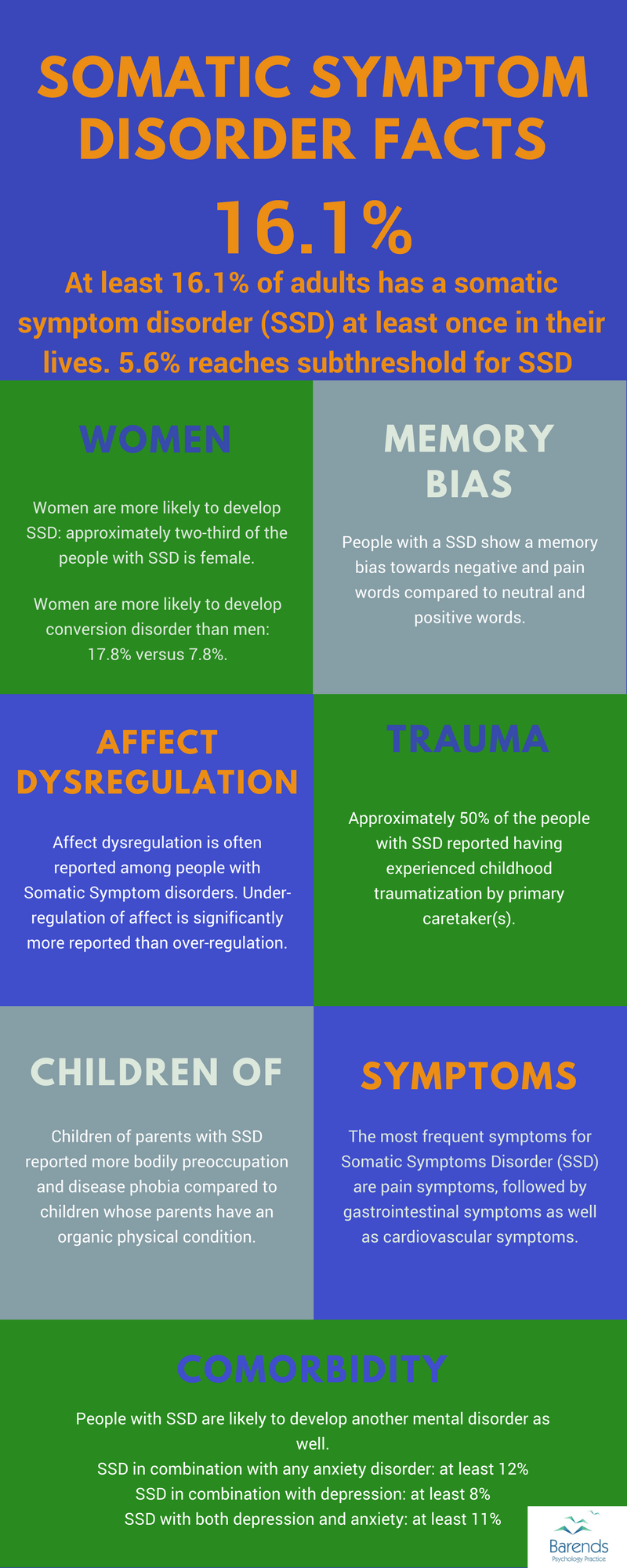
Yes. Stress and trauma can increase nervous system activation and make bodily sensations feel stronger or more threatening. Some people with somatic symptom disorder have trauma histories or overlapping symptoms of PTSD, complex PTSD, anxiety, or depression.
How do I know whether my symptoms are medical or psychological?
It is not always either-or. Physical symptoms can be real while also being influenced by stress, fear, attention, and emotional regulation. A careful assessment should consider both medical and psychological factors.
When should I seek help for somatic symptoms?
You may benefit from professional support if symptoms cause repeated worry, avoidance, medical reassurance seeking, relationship strain, or disruption in work, sleep, or daily activities.

References
- American Psychiatric Association. (2022). Diagnostic and Statistical Manual of Mental Disorders (5th ed., text rev.; DSM-5-TR). American Psychiatric Association Publishing.
- World Health Organization. (2019). International Classification of Diseases 11th Revision (ICD-11). World Health Organization.
- Kroenke, K. (2007). Efficacy of treatment for somatoform disorders: a review of randomized controlled trials. Psychosomatic Medicine, 69, 881-888.
- Sumathipala, A. (2007). What is the evidence for the efficacy of treatments for somatoform disorders? A critical review of previous intervention studies. Psychosomatic Medicine, 69, 889-900.
- Rief, W., Hessel, A., & Braehler, E. (2001). Somatization symptoms and hypochondriacal features in the general population. Psychosomatic Medicine, 63, 595-602.
- Annemiek van, D., Julian D, F., Onno van der, H., Maarten JM, V. S., Peter GM, V. D. H., & Martina, B. (2011). Childhood traumatization by primary caretaker and affect dysregulation in patients with borderline personality disorder and somatoform disorder. European Journal of Psychotraumatology, 2, 5628.