


Agoraphobia Self-Help: Practical Strategies to Reduce Fear and Avoidance
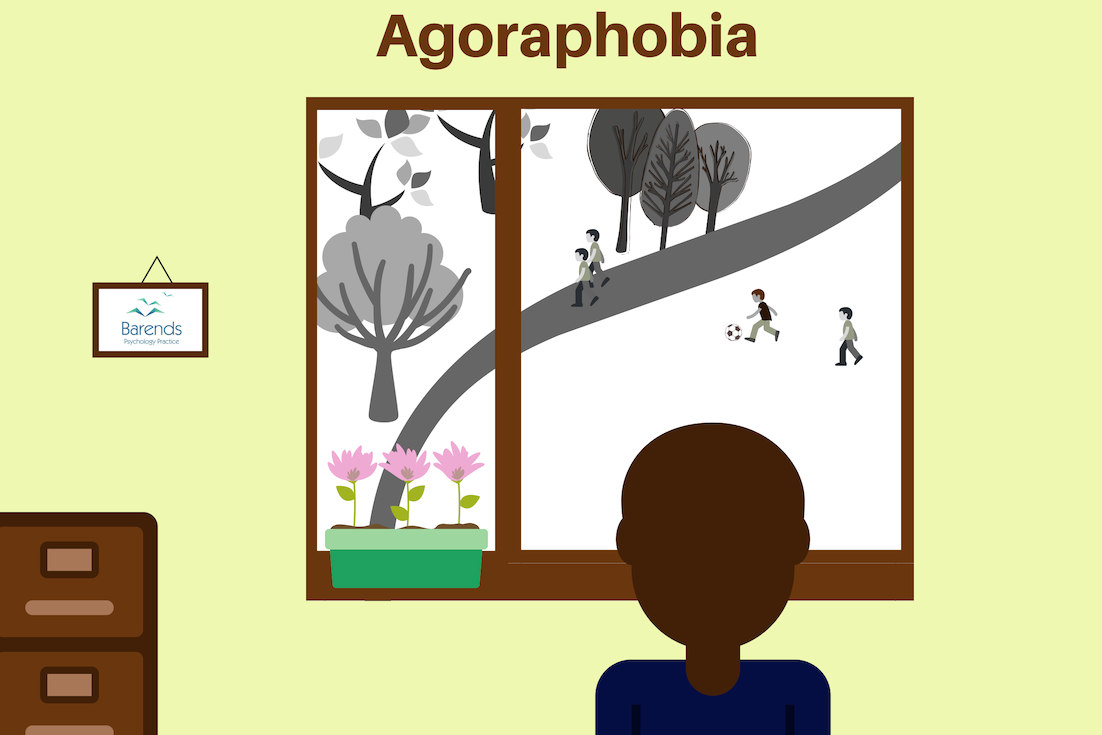
Agoraphobia self-help focuses on breaking the cycle of anxiety, avoidance, and safety behaviours that maintain the problem over time. While professional treatment is often the most effective and structured approach, many of the core principles can also be applied independently. When used consistently, these strategies can help you begin reducing symptoms and gradually regain control over situations that currently feel overwhelming.
Agoraphobia is often misunderstood as a fear of specific places, such as crowds, public transport, or open spaces. In reality, it is more accurately described as a fear of internal experiences, such as panic, dizziness, shortness of breath, or a sense of losing control, occurring in situations where escape feels difficult or help may not be available (see agoraphobia symptoms).
Because of this, the problem is not the situation itself, but the expectation of what might happen within that situation. This leads to avoidance and the use of safety behaviours, which reduce anxiety in the short term, but prevent the brain from learning that these situations are actually safe. A self-reinforcing pattern in which fear spreads and daily life becomes increasingly restricted (learn more about how agoraphobia develops) is often the result of this avoidance or usage of safety behaviours.
Effective self-help works in the opposite direction. Instead of trying to control or eliminate anxiety, it focuses on gradually approaching feared situations, reducing safety behaviours, and learning through experience that anxiety, although uncomfortable, is not dangerous and will decrease on its own.
On this page, you will find practical, evidence-based strategies that translate these principles into clear, step-by-step actions. The goal is long-term change: starting a feedback loop, reducing avoidance, increasing confidence, and expanding your ability to function freely in everyday life.
Key principles of effective Agoraphobia Self-Help
- Progress comes from approaching, not avoiding
- Anxiety decreases through experience, not control
- Small, consistent steps are more effective than big jumps
- Reducing safety behaviours is essential
- Confidence grows through repeated exposure
On this page:
Understanding the cycle of agoraphobia
Before applying any agoraphobia self-help strategies, it is essential to understand what actually maintains the problem. Agoraphobia is caused by a self-reinforcing feedback loop between anxiety, interpretation, and behavior.
In most cases, this cycle unfolds as follows:
- You enter (or think about) a situation (e.g., a shop or public transport)
- You notice internal sensations (e.g., dizziness, heart rate, tension, sweaty palms)
- These sensations are interpreted as dangerous (“What if I panic?” “What if I faint?”)
- Anxiety increases rapidly
- You escape, avoid, or use safety behaviours
- Anxiety decreases quickly
- The brain learns: “This situation was dangerous –> escape kept me safe”
This is the core of the feedback loop: relief reinforces avoidance, because anxiety drops immediately after escaping or using safety behaviours. The brain treats these actions as necessary for survival, and as a result, it becomes more likely to trigger anxiety faster and more intensely the next time.
At the same time, attention becomes increasingly focused on the body. Normal sensations such as lightheadedness or a faster heartbeat are noticed more quickly and interpreted as warning signs. This further amplifies anxiety even in objectively safe situations.
This feedback loop leads to:
- Increased sensitivity to agoraphobia symptoms
- A growing fear of internal sensations (panic, dizziness)
- Faster and stronger anxiety responses in familiar situations
- Expansion of avoidance to more environments
- A gradual restriction of daily life
This is why agoraphobia often feels like it is “spreading.” The brain is not reacting to the situation itself, but to the predicted internal experience and the belief that it cannot be managed (see how agoraphobia develops).
Effective self-help works by reversing this cycle. Instead of escaping anxiety, you gradually remain in situations long enough for the brain to update its expectations. This creates new learning:
- Anxiety rises, but also falls on its own
- Physical sensations are uncomfortable, but not dangerous
- Escape is not necessary
This shift from avoidance to exposure is what breaks the feedback loop and allows confidence to rebuild over time.
Clinical insight:
In practice, many clients initially believe that their anxiety is caused by the situation. The real driver, however, is the expectation of what might happen internally. When that expectation is no longer automatically followed by escape, the cycle begins to weaken.
Niels Barends, MSc
Psychologist specialized in anxiety disorders
Not sure if this cycle applies to you?
You can take the agoraphobia test for a quick indication, or explore treatment options if you want structured guidance.
Step 1: Map your avoidance patterns
Effective agoraphobia self-help starts with clarity. Many people underestimate how strongly their daily behaviour is shaped by avoidance and subtle safety strategies. These patterns often develop gradually and become “normal,” which makes them difficult to recognize.
To begin, it is important to map out your personal pattern. Ask yourself:
- Which situations do I avoid completely?
- Which situations do I only enter under specific conditions?
- What do I need in order to feel “safe enough”?
In practice, this may include:
- Only going out with a trusted person
- Staying close to exits or “escape routes”
- Carrying specific items (phone, water)
- Constantly checking your body for signs of anxiety
- Using distraction to suppress anxiety
These behaviours are often referred to as safety behaviours. While they reduce anxiety in the short term, they play a key role in maintaining the agoraphobia cycle. Each time you avoid a situation or rely on a safety behaviour, the same feedback loop is reinforced:
- Anxiety appears
- You escape or reduce it using a strategy
- Anxiety drops
- The brain learns: “I needed this to stay safe”
Because the anxiety decreases quickly, the brain never learns that the situation itself is safe or that the anxiety would have passed on its own. Instead, it strengthens the belief that avoidance or control is necessary. This leads to:
- Stronger and faster anxiety responses
- Increased focus on internal symptoms (e.g., heart rate, dizziness)
- Expansion of fear to more situations
- A growing dependence on safety behaviours
Mapping your patterns makes this loop visible. Instead of seeing anxiety as random or unpredictable, you begin to recognize the specific situations and behaviours that keep it going.
The situations you avoid and the strategies you rely on are the exact points where change can begin. In the next steps, these patterns will become the starting point for gradual exposure and reducing safety behaviours.
Step 2: Use gradual exposure
The most effective self-help strategy for agoraphobia is gradual exposure. This means deliberately entering situations you fear, not all at once, but in a structured and manageable way.
Instead of waiting until you feel ready, you begin at a level that feels challenging but still doable. This might be something small, such as standing outside your home for a few minutes or briefly entering a shop. Slowly you increase the difficulty step by step.
The purpose of exposure is not to eliminate anxiety immediately. In fact, anxiety is expected. What matters is that you remain in the situation long enough for your brain to learn something new: that the anxiety rises, peaks, and eventually decreases on its own, without the need to escape or rely on safety behaviours.
Through repeated experiences like this, several important shifts begin to occur. Situations that once felt dangerous start to feel more predictable. Physical sensations such as a racing heart or dizziness become less threatening. Most importantly, your confidence grows because you learn that you can handle it.
Staying in the situation is essential. If you leave too early, the brain links relief to escape, reinforcing the agoraphobia cycle. You interrupt that cycle and allow new learning to take place by staying.
Clinical insight:
In practice, people often wait until they “feel ready” before approaching feared situations, but this moment rarely comes. Readiness is not something that appears before action, it develops through action.
What I often see is that clients initially enter situations with high anxiety, expecting it to become overwhelming. But when they stay, without escaping or relying on safety behaviours, something important happens: the anxiety peaks and then gradually decreases on its own.
This experience creates new learning. Not just that the situation is safe, but that they can handle the anxiety within it. Over time, this shifts the focus from “I need to avoid this” to “I can manage this,” which is a key turning point in recovery.
Niels Barends, MSc
Psychologist specialized in anxiety disorders
Step 3: Reduce safety behaviours
Safety behaviours are one of the most important, and often most overlooked, factors that maintain agoraphobia. While they can make situations feel more manageable in the moment, they prevent your brain from learning that those situations are actually safe.
These behaviours are not always obvious. Over time, they become subtle habits that feel necessary just to get through everyday situations. You may not even notice them anymore, because they have become part of how you cope.
For example, you might automatically reach for your phone to distract yourself, stay close to exits without thinking about it, or feel the need to check with others whether you are “okay.” Some people carry specific items for reassurance, while others constantly monitor their body for signs of anxiety.
Although these strategies reduce anxiety in the short term, they reinforce the underlying fear. Each time you rely on them, the brain draws the same conclusion:
“This situation is only safe because I did something to control it.”
Because of this, the core belief remains unchallenged. Instead of learning that the situation itself is safe, your brain learns that safety depends on control, preparation, or escape. This keeps the feedback loop of agoraphobia intact.
Effective Agoraphobia self-help involves gradually reducing these behaviours. This does not mean removing everything at once, but carefully creating situations in which you rely on them a little less.
For instance, you might stay in a situation without immediately checking your phone, delay leaving when anxiety rises, or postpone seeking reassurance to see what happens instead. You may also experiment with allowing physical sensations to be present without trying to control or suppress them.
At first, this often increases anxiety. This is a normal and expected part of the process. What matters is what happens next: when you remain in the situation without relying on safety behaviours, your brain has the opportunity to learn something new—that the anxiety is uncomfortable, but not dangerous and not dependent on those behaviours.
Clinical insight:
Many clients initially feel that letting go of safety behaviours is the most difficult step. One client once described it as:
“It felt like I was giving up the only things that kept me safe. The first time I didn’t check my phone or look for the exit, my anxiety went through the roof. But when I stayed, nothing actually happened. After a few times, I started to trust that I didn’t need those things anymore.”
This reflects a key shift in recovery. What changes is not just the anxiety itself, but the belief that safety depends on certain behaviours. As that belief weakens, anxiety usually becomes less intense and less controlling.
Niels Barends, MSc
Psychologist specialized in anxiety disorders
Reducing safety behaviours is uncomfortable at first, but it is one of the most powerful ways to create lasting change. It allows your brain to update its expectations and rebuild confidence in your ability to handle anxiety independently.
Step 4: Change your response to anxiety
A key shift in recovery from agoraphobia is moving from control to tolerance. Most people naturally try to prevent, reduce, or control anxiety as quickly as possible. While this is understandable, it unintentionally maintains the problem over time.
As explained in the causes of agoraphobia, the brain learns through experience. If your response to anxiety is always to escape, avoid, or control it, the brain never gets the chance to learn that anxiety is actually safe and temporary.
Recovery begins with a different approach. Instead of trying to eliminate anxiety, you gradually change how you respond to it. This means allowing the feeling to be present without immediately reacting, observing physical sensations without interpreting them as dangerous, and remaining in the situation long enough for anxiety to naturally decrease.
This can feel counterintuitive at first. Many agoraphobia symptoms, such as shortness of breath, dizziness, or a racing heart, can feel intense and alarming. However, these sensations are not harmful, even though they may feel that way in the moment.
When you stop trying to control these sensations, something important happens: the body begins to regulate itself. Anxiety rises, reaches a peak, and then gradually decreases on its own. This natural process is often referred to as habituation or corrective learning.
Over time, this leads to a fundamental shift in how anxiety is experienced. Instead of seeing it as something that must be stopped, it becomes something that can be tolerated and allowed to pass. This reduces the urge to escape and weakens the patterns that maintain agoraphobia.
Struggling to apply this in real situations?
Changing your response to anxiety is easier with the right structure and guidance. If you feel stuck in avoidance or control patterns, professional support can help you break the cycle step by step.
This shift—from control to tolerance—directly reduces the need for avoidance and safety behaviours, which are central in maintaining agoraphobia (see how treatment works).
The less you fight anxiety, the less power it has. By changing your response, you allow your brain to learn that anxiety is not something you need to fear or avoid.
Step 5: Build consistency
Consistency is one of the most important, and often underestimated, factors in recovery from agoraphobia. While it can be tempting to focus on occasional “big” exposures, real progress comes from repeated, consistent experiences that gradually reshape how your brain responds to anxiety.
Agoraphobia develops over time through repeated patterns of avoidance and fear (see how agoraphobia develops). In the same way, recovery is not a single breakthrough moment, but a process of steady learning. Each time you enter a situation without avoiding it or relying on safety behaviours, you reinforce a new message: that the situation is manageable and that anxiety will pass.
This kind of learning depends on repetition. One exposure can be helpful, but it is the regular return to similar situations that creates lasting change. Short, frequent practice tends to be more effective than pushing yourself occasionally and then stopping. Over time, repetition creates familiarity, and familiarity reduces fear.
In practical terms, this means integrating exposure into your routine rather than treating it as a one-time effort. Even small steps matter, as long as they are repeated. Gradually increasing the level of difficulty, while staying in situations long enough for anxiety to decrease, allows the brain to build more stable expectations.
It is also important to recognize that progress is rarely linear. Some days will feel easier, while others may feel like a step back. This is a normal part of the process. What matters most is not how you feel on a given day, but whether you continue to engage with the process over time.
A common pitfall is stopping too early, for example when anxiety begins to decrease slightly. While this can feel like success, it may not be enough for the brain to fully update its expectations. Continued and repeated exposure strengthens the new learning and makes it more resilient.
Over time, this consistent approach leads to noticeable changes. Situations that once felt overwhelming become more predictable. The urge to escape decreases, and confidence grows, even in the presence of anxiety. Gradually, the range of situations you can handle expands again.
Recovery is not about eliminating anxiety in a single moment. It is about retraining your brain through consistent experience. The more often you face situations without avoiding them, the more your brain learns that they are safe—and that you can handle them.
Author:
Niels Barends, MSc, psychologist with over 14 years of experience specializing in anxiety disorders and exposure-based therapy.
His work focuses on helping clients reduce avoidance, change their response to anxiety, and gradually regain independence.
Last reviewed: April 2026
Frequently asked questions about Agoraphobia Self-Help
Why does agoraphobia keep getting worse over time?
Agoraphobia is maintained by a self-reinforcing feedback loop. When anxiety appears in a situation, most people naturally try to escape, avoid it, or reduce it using safety behaviours. This leads to immediate relief, which teaches the brain: “Avoidance keeps me safe.”
Because of this, the brain never learns that the situation is actually safe or that anxiety would decrease on its own. Instead, the fear becomes stronger and spreads to more situations over time.
Breaking this loop requires doing the opposite: staying in situations long enough for anxiety to rise and fall naturally. This creates new learning and gradually weakens the fear response.
Can agoraphobia be treated without therapy?
Self-help strategies can be effective, particularly in mild to moderate cases where avoidance is still limited. However, agoraphobia is often maintained by deeply ingrained patterns of avoidance and safety behaviours. Structured therapy, such as exposure-based treatment, typically leads to faster, more consistent, and more sustainable results, especially when symptoms are more severe or long-standing.
What is the most important self-help strategy?
The most effective Agoraphobia self-help strategy is gradual exposure. This means systematically entering feared situations instead of avoiding them, allowing your brain to learn that these situations are not dangerous. Without exposure, the fear structure remains unchanged. With repeated exposure, anxiety naturally decreases over time.
Should I try to reduce anxiety during exposure?
No. Trying to control or eliminate anxiety during exposure often maintains the problem. The goal is to change your response to anxiety, not to get rid of it. When you allow anxiety to rise and fall without escaping, your brain learns that it is temporary and manageable. This shift is a core part of effective Agoraphobia self-help.
What are safety behaviours, and should I stop them?
Safety behaviours are strategies used to reduce anxiety, such as distraction (e.g., using your phone), seeking reassurance, or staying close to exits. While they can make situations feel more manageable in the short term, they prevent new learning. Reducing safety behaviours gradually is an essential part of recovery, because it allows you to experience that you can cope without them.
How long does it take to see improvement?
Some people notice initial improvements within a few weeks, especially if they practice consistently. However, meaningful and lasting change usually develops over time through repetition. The speed of progress depends on factors such as severity, consistency of practice, and willingness to face discomfort.
What if my anxiety feels too overwhelming to start?
If anxiety feels too intense, it usually means the starting point is too difficult. Effective self-help begins at a manageable level. This might mean very small steps, such as standing outside your home for a few minutes. Gradual progression is key. If even small steps feel unmanageable, professional guidance can help structure the process.
Can agoraphobia get worse if I don’t address it?
Yes. Without intervention, agoraphobia often becomes more restrictive over time. Avoidance tends to spread to more situations, and confidence decreases. Early action, even small steps, can prevent this pattern from becoming more severe.
When should I seek professional help?
You should consider professional help if:
- Your world is becoming increasingly restricted
- You rely heavily on safety behaviours
- Anxiety significantly impacts daily functioning
- Self-help does not lead to progress
For additional guidance on evidence-based approaches, you can also review this external resource from the NHS: Agoraphobia treatment overview (NHS).