


Fear of Abandonment: signs, causes, and relationship patterns
Written by Niels Barends, MSc, psychologist with more than 14 years of clinical experience in relationship problems and relational patterns. Updated June 2026.
Fear of abandonment can make distance, uncertainty, or emotional changes feel threatening, even when the relationship itself is not ending.
Do you find yourself worrying that people will leave, even when there is little evidence that they will? Does a delayed text message or change in someone’s tone quickly trigger anxiety or the urge to seek reassurance?
For people with fear of abandonment, relationships can feel emotionally fragile. Small signs of distance may be interpreted as signs of rejection, causing intense worry about losing someone important. That is why many people find themselves struggling with jealousy or experiencing recurring trust issues.
Fear of abandonment is the persistent fear that someone important will leave or reject you. Although these fears often appear most strongly in romantic relationships, they can also emerge in friendships, family relationships, and even professional environments where belonging or approval feels important.
These patterns are often connected to earlier experiences of rejection or insecure attachment styles. However, this fear can also develop after painful adult experiences such as betrayal or repeated relationship instability.
The good news is that fear of abandonment is not a permanent personality trait. With greater awareness and the right strategies, it is possible to develop a stronger sense of emotional security and feel less controlled by the fear of being left behind.
Quick facts about fear of abandonment
- Fear of abandonment often involves intense anxiety around rejection or emotional withdrawal.
- It can appear as clinginess or people-pleasing, but also as jealousy or withdrawal.
- Abandonment fears are often connected to attachment wounds, past rejection, trauma, or inconsistent relationships.
- Small changes in communication may feel much larger when emotional security is already fragile.
- Fear of abandonment can create self-reinforcing cycles in relationships.
- Understanding the pattern is often the first step toward building more secure relationships.
- Professional support can help when abandonment fears become intense or difficult to regulate.
In this article
Looking for support with abandonment fears?
If this type of fear is affecting your relationships or ability to trust others, professional support can help you understand the pattern and develop healthier ways to respond to uncertainty and relationship stress.
Signs of fear of abandonment
Fear of abandonment does not always look obvious. Some people become anxious and seek reassurance as soon as they sense emotional distance. Others do the opposite and withdraw before anyone has the chance to reject them. Some become jealous or highly sensitive to changes in communication, while others hide their fears behind a strong appearance of independence. At its core, fear of abandonment is about the emotional meaning attached to separation. A cancelled plan or conflict may trigger fears that the relationship is no longer safe or secure.
You may recognize this fear if several of the following patterns sound familiar:
- Feeling anxious when someone important becomes distant or unavailable
- Needing frequent reassurance that the relationship is still secure
- Becoming highly sensitive to changes in tone or texting patterns
- Fear that conflict means the relationship is ending
- Jealousy or checking behavior
- People-pleasing to avoid rejection or disappointment
- Difficulty expressing needs because of fear of being “too much”
- Pulling away first to avoid being hurt later
- Feeling emotionally overwhelmed when plans change unexpectedly
- Staying in unhealthy relationships because leaving feels unbearable
Many people with fear of abandonment describe feeling as if their emotional safety depends on the relationship staying stable. Small signs of distance can therefore feel much larger than they appear to others. A minor disagreement or temporary withdrawal can trigger intense anxiety or panic.
Not everyone with fear of abandonment behaves in the same way. The underlying fear may be similar, but the coping strategy differs. One person may constantly seek closeness and reassurance, while another may avoid intimacy altogether. Both strategies are often attempts to protect against the same fear: being rejected or emotionally abandoned.
What causes fear of abandonment?
Fear of abandonment usually develops after experiences that taught someone, consciously or unconsciously, that relationships are not entirely safe or predictable. When important relationships involve rejection or loss, the brain learns to stay alert for signs that the same thing might happen again. This can create a pattern in which even small changes in communication or affection trigger anxiety. For example, a delayed text message or a partner needing space can activate a deeper fear of being rejected or left behind.
Common experiences that can contribute to fear of abandonment include:
- Inconsistent caregiving during childhood. When parents or caregivers were sometimes emotionally available and sometimes distant, children may learn that closeness is unpredictable and can disappear unexpectedly.
- Emotional neglect. When emotional needs were repeatedly ignored or minimized, people may grow up feeling that they are not important enough to be cared for.
- Loss, separation, or divorce. The death of a loved one or prolonged separation can create a lasting fear that important relationships may suddenly end.
- Trauma or attachment wounds. Experiences involving abandonment or instability can make the nervous system highly sensitive to signs of distance or withdrawal.
- Past betrayal or infidelity. Being cheated on or experiencing emotional infidelity can make future relationships feel less safe and increase fear that the same pain will happen again.
- Abusive or unstable relationships. Relationships involving criticism or control can strengthen fears of rejection and emotional abandonment. Learn more about abusive relationships.
- Attachment insecurity. Fear of abandonment is commonly associated with anxious attachment, but it can also appear in avoidant and disorganized attachment patterns. Learn more about attachment styles in relationships.
Importantly, fear of abandonment is not always about the present relationship. Many people find themselves reacting to current situations as if old experiences are happening again. A loving and reliable partner may still trigger anxiety because the nervous system has learned to expect loss, rejection, or emotional withdrawal. This is why fear of abandonment often feels so intense. The reaction is usually about what is happening now, and about what similar experiences have meant in the past.
Fear of abandonment in relationships
Fear of abandonment often becomes most visible in close relationships. Emotional distance or uncertainty about the future can trigger fears of rejection. How people respond to these fears varies. Some seek more closeness and reassurance. Others become distant or try to protect themselves from potential rejection. Although the behaviors may look very different, they are often driven by the same underlying fear: losing an important emotional connection.
The relational archetypes help explain why fear of abandonment shows up differently from person to person. Understanding your dominant pattern can provide valuable insight into your emotional triggers and coping strategies.
Relational Archetype example: Anchor × Catalyst abandonment dynamics
Fear of abandonment can also interact with differences in relational communication style. Within the Relational Archetypes framework, different people respond to uncertainty and emotional pressure in different ways.
For example, in an Anchor × Catalyst dynamic, partners may experience stability and change very differently. The Anchor often values consistency and emotional steadiness. When the relationship feels uncertain, Anchors may seek reassurance through routine and clear commitment. Sudden changes in plans or unpredictability may feel especially unsettling.
The Catalyst, by contrast, often needs space for movement and change. Catalysts may become restless when the relationship feels too constrained or repetitive. Their desire for movement does not necessarily mean they are less committed, but it may be experienced that way by a partner who strongly needs stability.
In healthy relationships, these differences can complement each other. The Anchor can bring steadiness and commitment, while the Catalyst can bring growth and emotional movement. However, when fear of abandonment is activated, the Anchor may interpret the Catalyst’s need for change as distance or rejection. The Catalyst may then feel restricted or misunderstood, which can increase their need for space.
| Situation | Anchor response | Catalyst response |
|---|---|---|
| Feeling secure | Enjoys consistency and commitment. | Enjoys growth and new experiences. |
| Partner becomes distant | May seek reassurance or confirmation that the relationship is still secure. | May pull back or seek space before reconnecting. |
| Fear of abandonment activated | May worry about rejection or losing stability. | May worry about losing freedom, becoming trapped, or feeling emotionally pressured. |
| Typical coping strategy | Moves toward connection or repair. | Moves toward perspective or temporary withdrawal. |
| Common misunderstanding | “You’re pulling away because you don’t care.” | “You’re demanding reassurance because you don’t trust me.” |
Understanding these differences can help couples separate fear from reality. The Anchor’s need for reassurance does not necessarily mean they are controlling, and the Catalyst’s need for space does not necessarily mean they are abandoning the relationship. Often both partners are trying to feel safe, but in very different ways.
Discover Your Relational Archetype
Fear of abandonment is often shaped by deeper relationship patterns. The Relational Archetype Assessment helps identify how you naturally respond to closeness and relationship stress.
Discover your dominant Relational Archetype and gain insight into your communication style and potential blind spots.
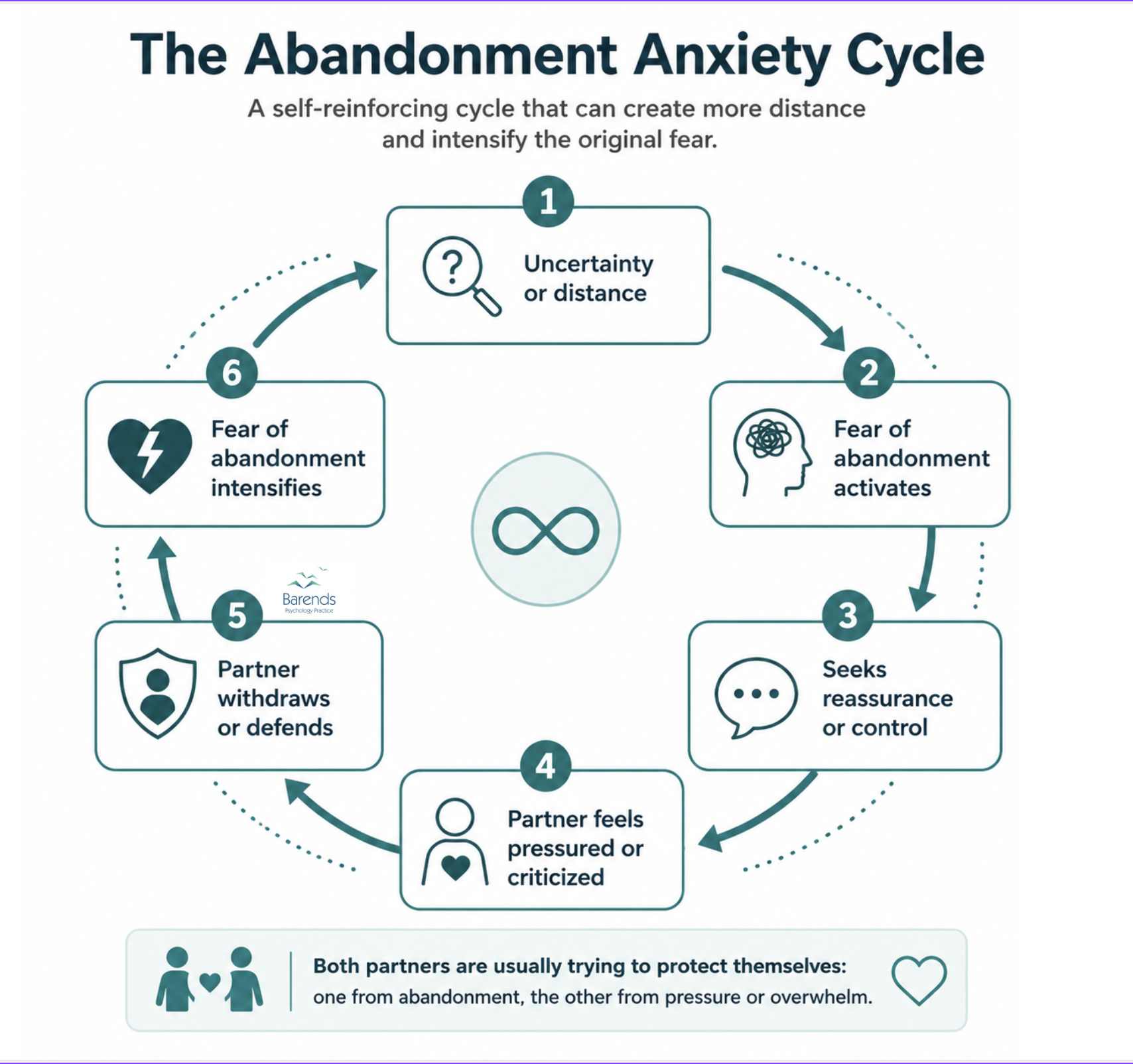
The Abandonment Anxiety Cycle
Fear of abandonment often becomes self-reinforcing. A person senses distance or uncertainty, becomes anxious, and tries to restore security. This may involve reassurance-seeking or attempts to control the situation. Although these reactions are understandable, they may unintentionally create more tension in the relationship. The other partner may feel pressured or overwhelmed. They may respond defensively or pull away, which then confirms the original fear.
A common abandonment anxiety cycle looks like this:
- Something feels uncertain or inconsistent
- Fear of rejection or abandonment becomes activated
- The person seeks reassurance
- The partner feels pressured or misunderstood
- The partner withdraws or becomes defensive
- The original abandonment fear intensifies
How to work on fear of abandonment
Working on this fear means learning to recognize the fear before it controls your behavior. It also means building emotional security from the inside, rather than relying only on external reassurance.
1. Identify your abandonment triggers
Start by noticing what usually activates the fear. Is it delayed replies? Conflict? A partner needing space? Changes in affection? Unclear plans? Identifying the trigger helps separate the present situation from the emotional reaction. This may help you determine whether this fear has its roots in a (traumatic) experience from the past.
2. Separate facts from interpretations
Your fear often fills in missing information. For example, “They are quiet” may quickly become “They are losing interest.” Try to separate what actually happened from what your mind fears it means.
3. Communicate the need beneath the fear
Instead of saying, “You don’t care about me,” try to express the underlying need more directly: “When I don’t hear from you, I notice I become anxious. It would help me if we could talk about what communication feels realistic for both of us.”
4. Build tolerance for uncertainty
No relationship can remove uncertainty completely. Learning to tolerate some uncertainty without immediately seeking reassurance can gradually reduce abandonment anxiety.
5. Strengthen your life outside the relationship
This type of fear often becomes stronger when one relationship carries too much emotional weight. Friendships and personal goals can help create a more stable foundation.
6. Notice when the relationship is actually unsafe
Not all abandonment fear is irrational. Sometimes anxiety appears because the relationship is inconsistent, harmful, or emotionally unsafe. If a partner repeatedly threatens to leave or invalidates your feelings, the issue may not be fear of abandonment alone.
When Therapy May Help
Therapy may be helpful when fear of abandonment repeatedly affects relationships, creates intense anxiety or makes it difficult to feel secure even with reliable partners.
A psychologist can help you understand where the fear comes from and which coping strategies may be maintaining the pattern. Therapy may focus on attachment patterns, emotional regulation, trauma processing, self-worth, boundaries, and communication.
For some people, abandonment fear is connected to painful memories. In those cases, approaches such as CBT, schema therapy, attachment-focused therapy, or EMDR therapy may be useful.
Professional support for abandonment fears
If fear of abandonment is creating repeated conflict or difficulty trusting others, therapy can help you understand the pattern and develop healthier ways to respond.

Frequently Asked Questions about fear of abandonment
What is fear of abandonment?
Fear of abandonment is the intense fear that someone important will leave or emotionally disconnect from you. It can appear in romantic relationships and other close connections.
What causes this fear?
Fear of abandonment can develop after experiences of rejection or unstable relationships. It is often connected to insecure attachment patterns.
How does fear of abandonment affect relationships?
Fear of abandonment can lead to reassurance-seeking, jealousy, emotional withdrawal, conflict, checking behavior, or difficulty trusting a partner. These reactions can unintentionally create tension and make the relationship feel less secure.
Can this fear be healed?
Yes. Many people can reduce abandonment anxiety by understanding their triggers and developing a more secure sense of self and connection.
Is fear of abandonment the same as anxious attachment?
Fear of abandonment is common in anxious attachment, but it is not exactly the same thing. People with avoidant or disorganized attachment patterns may also fear abandonment, although they may cope by withdrawing or avoiding vulnerability.
When should someone seek help for this kind of fear?
Professional help may be useful when fear of abandonment causes repeated relationship conflict or staying in unhealthy relationships because separation feels unbearable.