


Being in a Relationship with Someone with Narcissistic Personality Disorder (NPD)
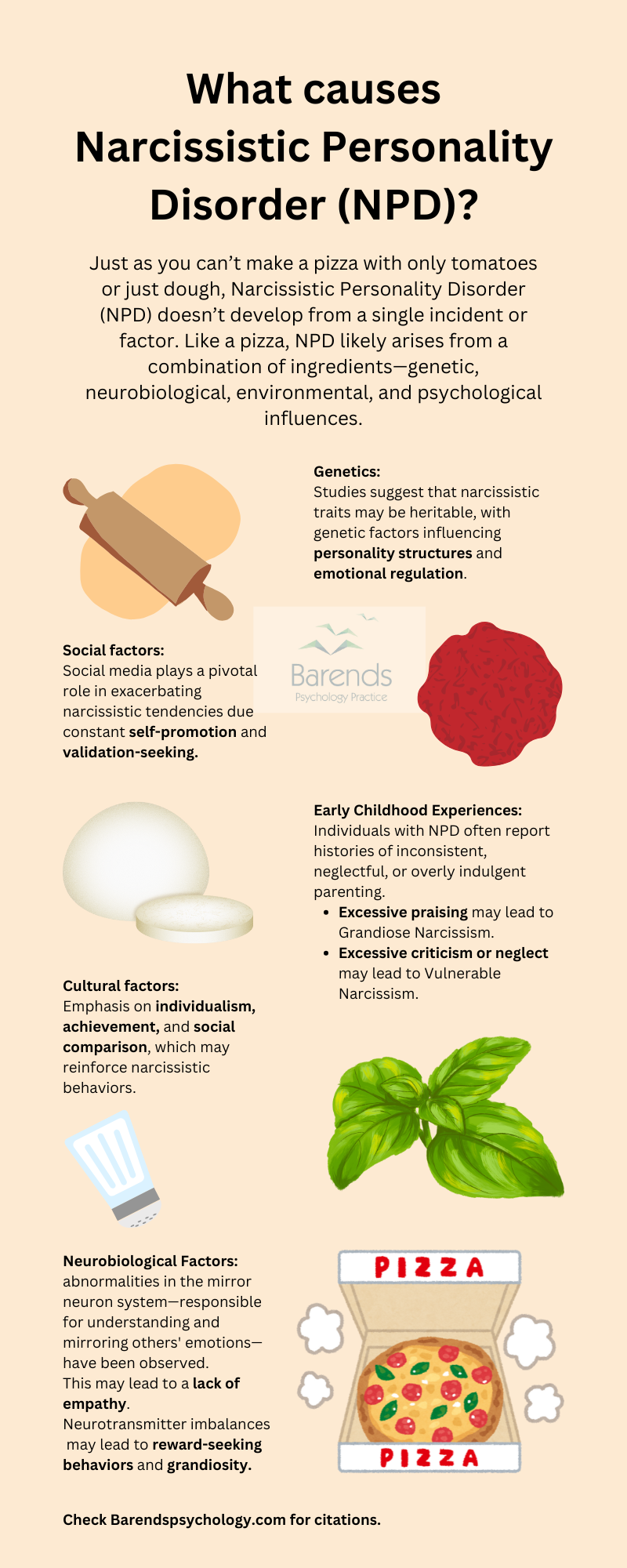
Causes of NPD.
Being in a relationship with someone who has Narcissistic Personality Disorder (NPD) can feel like a rollercoaster. People who are dating a narcissistic partner often describe a confusing pattern of warmth followed by criticism, manipulation, or emotional distance. At times, your partner with narcissistic personality disorder may appear charming, kind, loving, and confident. But those moments are often followed by blame, defensiveness, or emotional withdrawal. Over time, many people in a relationship with a narcissist begin to feel confused, emotionally drained, overwhelmed, and isolated, sometimes as if they are slowly losing their sense of self.
If this sounds familiar, you are not alone. This page is written for people who are currently in a relationship with someone who shows strong narcissistic traits or who may have Narcissistic Personality Disorder. It will help you understand what is happening in the relationship, recognize common warning signs, and explore practical ways to cope; especially if you want to stay in the relationship. We will also discuss situations where leaving the relationship may become the healthiest choice.
If you are still unsure whether narcissistic traits play a role in your relationship, you may want to start with our guide on Signs of a Narcissistic Partner, which explains the common behavioral patterns and early warning signs.
Signs You May Be Dating a Narcissistic Partner
Many people begin to question the relationship when certain patterns repeat over time. A single disagreement does not mean someone has narcissistic traits, but consistent patterns can indicate that you may be dealing with a narcissistic partner.
- Lack of empathy. Your partner struggles to understand or care about your emotional experience.
- Chronic blame shifting. Conflicts are rarely resolved because responsibility is redirected toward you.
- Gaslighting. Your partner denies events or conversations, leaving you doubting your own memory.
- Excessive need for admiration. Compliments and validation are expected, while criticism often leads to anger or withdrawal.
- Control of the narrative. Arguments are reframed so the narcissistic partner appears misunderstood or unfairly treated.
- Cycles of idealization and devaluation. Periods of affection and closeness are followed by criticism, distance, or emotional punishment.
If several of these patterns feel familiar, you may be dealing with a narcissistic partner. You can read more about early warning signs in our guide on Signs of a Narcissistic Partner.
Not sure whether your partner shows narcissistic traits?
You can use our narcissism questionnaires to better understand the patterns in your relationship.
In this article
5 Signs Your Partner May Have Narcissistic Traits
What is Narcissistic Personality Disorder (NPD)?
People with NPD have a deep need for admiration, struggle with empathy, and often have an inflated or fragile sense of self. This disorder usually develops during adolescence or early adulthood, often as a defense against deep feelings of inadequacy, shame, or emotional neglect.
There are different subtypes of narcissism: some are loud and attention-seeking, others are quiet and self-pitying, and some can be manipulative or even cruel. For a full explanation, see our Narcissistic Personality Disorder page.
Talk With a Therapist
Living with someone with narcissistic traits can lead to emotional exhaustion, anxiety, and burnout. Professional guidance can help you regain clarity and protect your mental health.
What It’s Like to Be in a Relationship with Someone with NPD
Many people in relationships with narcissists describe the beginning as magical. Your partner may have swept you off your feet with flattery, gifts, attention, and promises of a perfect future. This phase is often called “love bombing.” But over time, the relationship may change, sometimes subtly, sometimes dramatically.
Many of these behaviors are also described in our article on signs of a narcissistic partner, which explains the common relationship patterns in more detail.
You might notice:
- Constant criticism or blame (even for things that aren’t your fault)
- Gaslighting, where you’re made to doubt your memory or sanity
- Emotional distancing, especially when you need closeness
- Jealousy or control, even over innocent friendships or hobbies
- Mood swings, where small issues explode into major fights
- Silent treatments or passive-aggressive behavior
- Walking on eggshells, trying not to trigger anger or withdrawal
Even when you try to set boundaries or express your feelings, your partner may twist the conversation, accuse you of being selfish, or act like you’re the problem.
Someone whose partner has NPD might say: “I started to feel like I didn’t recognize myself anymore. I used to be confident and social. Now I just feel anxious and unsure of everything.”
Learn more about narcissism
- What is narcissism?
- NPD symptoms
- NPD causes
- Diagnosing NPD
- NPD treatment
- Heal your own narcissism – a self help guide
- Narcissistic Partner
- NPD test
- NPD test (short version)
- How to deal with a narcissistic parent?
- Having a narcissistic child
- Coping with a narcissistic mother-in-law
- Having a narcissistic boss
- Having a narcissistic coworker
- Narcissism facts
- Online treatment for narcissism or guidance for those living with a narcissist
- Return to the homepage
Emotional and Psychological Impact on You
Being in a relationship with someone with NPD doesn’t just hurt in obvious ways; it can slowly wear you down from the inside. The constant tension, unpredictability, and emotional manipulation can lead to deep and lasting psychological scars. Many partners describe feeling like they’ve lost their sense of self over time.
Here are some of the most common emotional effects:
- Chronic self-doubt: You may find yourself constantly second-guessing your thoughts, feelings, and decisions. When someone regularly tells you that you’re wrong, too sensitive, or misremembering things, it becomes hard to trust your own judgment.
- Low self-esteem: Constant criticism, blame, or emotional neglect can chip away at your confidence. You may begin to feel like you’re never good enough, no matter how hard you try to please your partner.
- Anxiety or depression: The emotional instability in the relationship (walking on eggshells, bracing for conflict, or feeling emotionally abandoned) can lead to chronic anxiety or sadness. It’s common to feel hopeless, on edge, or emotionally numb.
- Emotional exhaustion or burnout: When you’re always the one de-escalating, explaining, apologizing, or managing your partner’s moods, it’s exhausting. You might feel like you have nothing left to give: physically, mentally, or emotionally.
- Feelings of guilt or isolation: Many narcissistic partners manipulate you into feeling guilty for having normal needs or setting boundaries. You may even pull away from friends or family, either because your partner disapproves or because you’re too ashamed to tell them what’s really happening.
- Difficulty making decisions or trusting your instincts: Gaslighting and control tactics can make you doubt yourself so much that even small choices feel overwhelming. You may find yourself constantly looking to others for approval or reassurance.
Over time, you may start believing that your needs don’t matter
You may start believing that your needs don’t matter or that wanting things like kindness, connection, or emotional safety makes you “difficult.” You might feel guilty for needing space, respect, or even just a break; basic things that should exist in any healthy relationship.
It’s important to know that these feelings are not signs of weakness: they’re signs of emotional trauma. Living with someone who consistently undermines your sense of reality, value, or worth can take a serious toll on your mental health.
If this resonates with you, we strongly recommend taking our Burnout Test and Narcissism Test to get a clearer picture of how the relationship may be affecting you. These tools can be a helpful first step toward understanding your situation, and starting to heal.
Signs of Narcissistic Manipulation and Abuse

Manipulation techniques.
People with NPD may not always act with cruel intentions, but their behavior can still be emotionally abusive. Here are some common tactics:
- 1. Gaslighting.
Your partner denies things you saw or heard, making you doubt your reality.
“That never happened. You’re imagining things.” -
2. Blame-shifting
They never take responsibility; everything is your fault.
“You made me act this way.” - 3. Devaluation
After idealizing you, they start tearing you down: criticizing your looks, intelligence, or character.
- 4. Silent Treatment
Refusing to talk to you for hours or days to punish or control you.
- 5. Triangulation
Using other people to manipulate you:
“Even my friends think you’re too sensitive.” - 6. Love-Bombing After Conflict
After a fight, they shower you with affection, gifts, or apologies, only to repeat the same behavior again later.
These patterns are often part of the idealize–devalue–discard cycle, common in narcissistic relationships.
Why It’s So Hard to Leave
You may have thought about ending the relationship. But something holds you back. That’s completely normal and very human.
Why staying feels easier (even when it hurts):
- You hope they’ll change
- You still love them
- You remember the good times
- You’re afraid of how they’ll react
- You worry you’re overreacting or being “too sensitive”
- You don’t want to break up your family
- You fear being alone or starting over
Sometimes the emotional dependency becomes so strong that even imagining a life without them feels impossible.
“Every time I tried to leave, he’d suddenly become the man I fell in love with. I kept hoping this time it would last.”
Coping Strategies: How to Stay Without Losing Yourself
If you’ve decided to stay, whether it’s for now or long-term, you’ll need more than just patience. You’ll need a plan to protect your emotional and psychological well-being. Here are concrete strategies that can help you stay grounded, maintain your sense of self, and reduce the damage to your mental health:
1. Set Clear and Consistent Boundaries
Without firm boundaries, you risk being emotionally swallowed by the relationship. Boundaries are your protection, not punishments or ultimatums.
What to do:
• Decide where your limits are (e.g., yelling, name-calling, controlling behavior).
• Clearly communicate your boundaries in a calm, firm tone.
• Enforce them. If your partner crosses the line, follow through with a consequence, for example, ending the conversation or leaving the room.
Example: “I’m not okay with being insulted. If it happens again, I’ll take some space and stop engaging in the conversation.”
For more help, write down your limits and practice saying them out loud.
2. Stay Grounded in Reality (Protect Yourself from Gaslighting)
Narcissistic partners often rewrite reality. Over time, you may start to question your own memory, perception, or emotions.
What to do:
• Keep a private journal or log of major conversations, arguments, and emotional reactions.
• Note what was said, how you felt, and what actually happened.
• Revisit your notes when you feel confused or blamed.
This gives you solid ground to stand on when your partner tries to twist the facts.
3. Build an Emotional Safety Net
You can’t do this alone, and you shouldn’t have to. One of the most damaging effects of being with someone with NPD is isolation.
What to do:
• Talk regularly with at least one person who knows the truth: a friend, therapist, or support group.
• Don’t downplay the relationship issues or defend your partner’s behavior.
• Let people support you emotionally and remind you who you are.
If you don’t feel safe sharing with friends or family, consider therapy. Your feelings deserve a safe space.
4. Focus on Your Needs, Not Just Theirs
In narcissistic relationships, your partner’s needs often dominate everything. Over time, you may forget what you enjoy, value, or want.
What to do:
• Block out time each week for something that’s just for you: a hobby, walk, podcast, creative outlet, or simply rest.
• Check in daily: What do I need right now?
• Set mini-goals that help you reclaim your identity.
Examples:
• “Every Sunday morning is mine, no interruptions.”
• “I’ll start painting again, even if it’s just 10 minutes a day.”
5. Learn How NPD Works
Understanding narcissism helps you see through the manipulation. It breaks the cycle of blaming yourself and helps you anticipate patterns.
What to do:
- Read our article on Narcissistic Personality Disorder (NPD) and Narcissistic Subtypes to learn how narcissists think and behave.
- Recognize which subtype(s) apply to your partner, such as fragile, exhibitionistic, or malignant narcissism.
This will help you respond more strategically and emotionally disengage when needed.
6. Rebuild Your Self-Esteem and Identity
Living with someone who constantly criticizes or devalues you can make you forget who you are.
What to do:
• Start small: make a list of things you like about yourself, even if it feels hard.
• Reconnect with old friends, interests, and passions.
• Try affirmations that focus on your worth and strength, especially after a difficult interaction.
Examples:
• “I am allowed to take up space.”
• “It’s okay to want emotional safety and respect.”
7. Use “Grey Rock” Tactics When Needed
In moments when your partner is escalating, baiting you, or pushing your buttons, the best strategy is sometimes disengagement.
What to do:
• Stay emotionally flat and neutral, like a “grey rock.”
• Avoid reacting or defending yourself.
• Give short, calm answers and remove yourself if needed.
Example:
Partner: “You’re so dramatic, as always.”
You: “I’m not discussing this now.” [Then walk away.]
Use this technique strategically, not to suppress emotion, but to prevent escalation or protect yourself in the moment.
None of these strategies will “fix” your partner, but they will help you stay sane, safe, and centered while you’re still in the relationship. And if you reach a point where staying becomes too damaging, know this: leaving is always an option and it’s nothing to be ashamed of.
If you’re unsure how much damage this relationship is doing to your mental health, take our Burnout Test or NPD Test or contact us directly at Barends Psychology Practice.
When Staying Becomes Unsafe
If your partner becomes physically abusive, threatens you, isolates you completely, or makes you feel afraid for your safety, it may no longer be safe to stay.
You deserve love, respect, and peace. No one should live in fear or constant emotional distress.
If you’re unsure, speak to a trusted therapist or support line. You don’t need to make big decisions right away, but you do need a plan to stay emotionally safe.
Side-note: the risks of ChatGPT!
When a partner with narcissistic traits uses ChatGPT, it may become a source of constant validation that feeds grandiosity, entitlement, or grievance. Because the bot never challenges distorted self-views or toxic blame, it can reinforce dysfunctional thinking about you or the relationship. You may find your partner becomes more self-absorbed, emotionally unavailable, or even more critical, because the AI seems to side with them. Over time, the chatbot can become an echo chamber that justifies harmful behavior and deepens the emotional divide between you and your partner. For more information, please read our informative article on the risks of chatGPT on mental health.
Final Thoughts
Being in a relationship with someone with NPD can feel overwhelming, confusing, and painful, but it doesn’t mean you’re weak or broken. You’re trying your best to hold things together in a situation that most people don’t understand.
Whether you stay or leave, your well-being matters. Start by reclaiming your voice, your boundaries, and your self-worth. And know that you don’t have to go through this alone.
Need Help?
Barends Psychology Practice offers online and in-person counseling for people in relationships with narcissistic partners. We help people regain clarity, rebuild confidence, and make healthier decisions about their relationships.
About the author

Author of Partner with NPD
Niels Barends is a psychologist with experience in mental health, personality patterns, trauma-related difficulties, and relationship dynamics. This article was written to help readers better understand recurring relational patterns associated with narcissistic traits.
This article is intended for educational purposes and does not replace diagnosis, therapy, or individual mental health care.