


Agoraphobia Causes: How Agoraphobia Develops and Why It Persists

Agoraphobia causes are often misunderstood. Many people assume that agoraphobia is simply a fear of places such as crowds, public transport, or open spaces. In reality, it is an anxiety disorder that develops through a combination of panic experiences, learned associations, avoidance, and safety behaviours.
In most cases, agoraphobia does not appear suddenly. It typically begins with one or more intense anxiety or panic episodes in specific situations. These experiences can lead to a heightened awareness of bodily sensations and a fear of losing control. Over time, the brain starts linking these internal experiences to external situations, which explains why many agoraphobia symptoms are not about the situation itself, but about what might happen inside the person.
As this pattern develops, people often begin to avoid situations or rely on safety behaviours to reduce anxiety. While this may provide short-term relief, it strengthens the underlying fear and contributes to the persistence of the problem. This is why agoraphobia causes are closely linked to the processes that also maintain the disorder over time.
On this page, you will find a structured overview of the most important agoraphobia causes, including how the condition develops, what maintains it, and why it often becomes worse without treatment. If you are unsure whether your experiences match this pattern, you can also take the agoraphobia test for a first indication.
Key facts about agoraphobia causes
- Agoraphobia often develops after panic attacks
- The fear shifts from the situation to internal sensations
- Avoidance and safety behaviours maintain the problem
- The condition often develops gradually over time
- Multiple factors (psychological and biological) play a role
- Effective treatment targets maintaining factors
Do you recognize these patterns?
If you are unsure whether your symptoms are related to agoraphobia, a structured test can help you gain a first indication.
On this page:
1. Panic attacks and first experiences
One of the most common agoraphobia causes is the experience of a panic attack in a specific situation. This may occur in environments such as a supermarket, public transport, or a crowded place where leaving quickly feels difficult.
During such an episode, a person may experience intense physical sensations, including a racing heart, dizziness, shortness of breath, or a feeling of losing control. These sensations are often unexpected and can feel overwhelming, especially if the person does not yet understand what is happening.
In that moment, the brain attempts to make sense of the experience. Because the symptoms feel intense and threatening, they are often interpreted as dangerous (e.g., “Something is wrong with me” or “I might faint or lose control”).
After this experience, the brain begins to link the situation with danger. The location itself becomes associated with the panic response, even though it was not objectively unsafe. This is often the first step in the development of agoraphobia.
Clinical insight:
In practice, it is rarely the situation itself that causes the problem. What people remember most is the intensity of the internal experience and the fear of it happening again.
Many clients describe a moment where something “flipped.” Before the panic episode, the situation felt neutral. Afterward, the same place feels unpredictable or unsafe, not because of the environment, but because of what might happen internally.
This shift—from trusting the situation to monitoring internal sensations—is a key mechanism in how agoraphobia begins to develop.
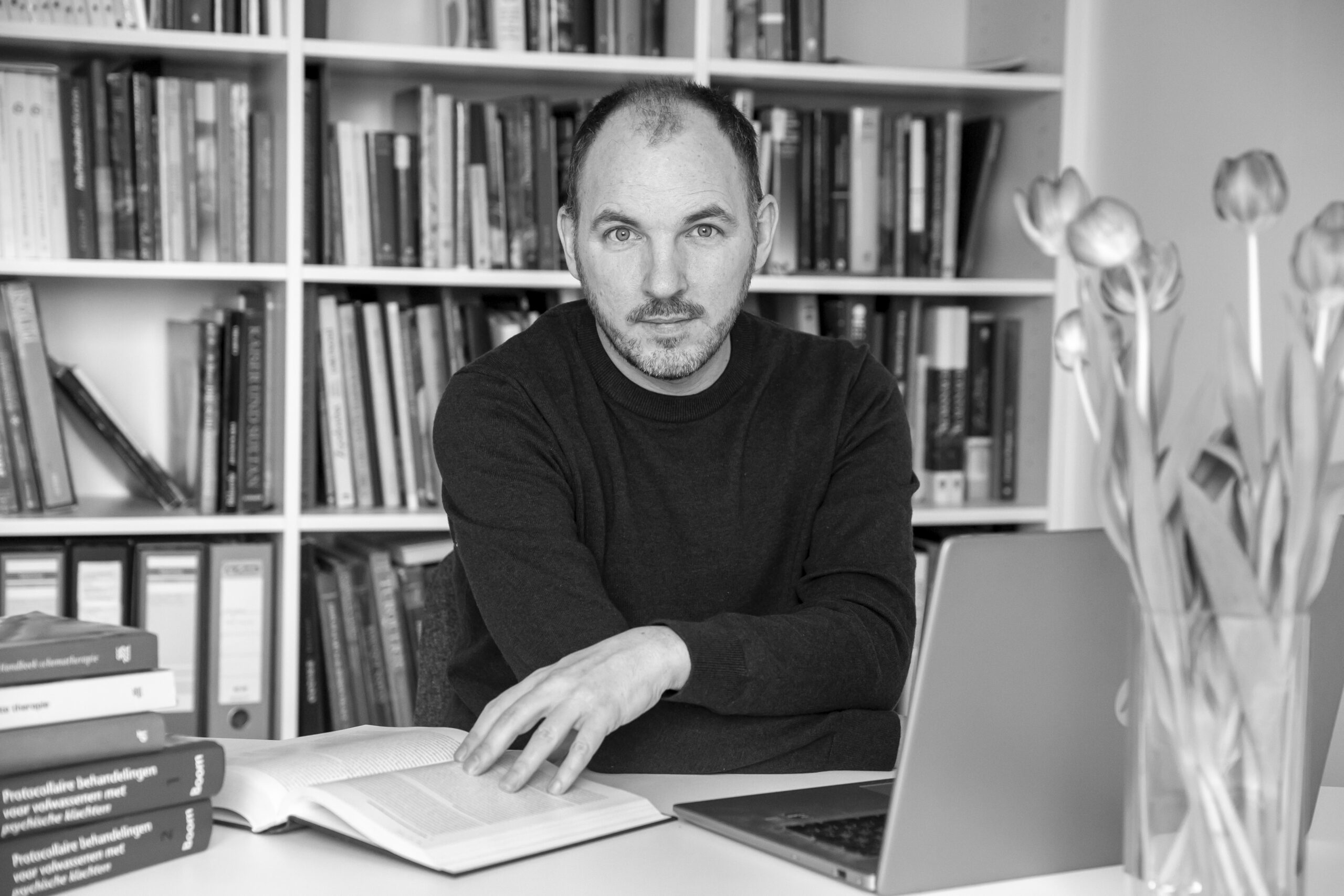
Niels Barends, MSc
Psychologist specialized in anxiety disorders
2. Learned associations and fear conditioning
Another key factor in agoraphobia causes is how the brain learns from experience. After a panic episode, the brain begins to associate similar situations with risk, even if those situations are objectively safe.
For example, if a panic attack occurs in a supermarket, other environments such as shopping malls, trains, or busy streets may also begin to feel unsafe. This happens because the brain is not only learning about one specific place, but about patterns: crowds, distance from home, lack of exits, or feeling “trapped.”
This process is known as fear conditioning. Over time, the fear generalizes to more situations, meaning that anxiety is triggered in an increasing number of environments.
Importantly, this process can also become anticipatory. Anxiety may arise not only in the situation itself, but also when thinking about going there. This is why people often begin to feel tension before leaving the house or planning activities.
Without intervention, this learning process continues, reinforcing the belief that these situations are dangerous and should be avoided.
3. Avoidance and safety behaviours
Avoidance is one of the most powerful maintaining agoraphobia causes. When a situation feels threatening, the natural response is to avoid it or leave as quickly as possible. This leads to an immediate reduction in anxiety, which makes the behaviour feel effective and necessary.
However, this short-term relief comes at a cost. Each time a situation is avoided, the brain learns: “I was safe because I left or avoided it.” As a result, the belief that the situation is dangerous is never questioned or updated.
Over time, this creates a pattern where more and more situations begin to feel unsafe. What starts as avoiding one place (e.g., a supermarket) can gradually extend to similar environments, such as shopping malls, public transport, or crowded streets.
In addition to avoidance, people often rely on safety behaviours to manage anxiety while still entering situations. These are subtle strategies used to feel “safe enough”:
- Only going out with a trusted person
- Staying close to exits or “escape routes”
- Carrying medication, water, or a phone “just in case”
- Constantly monitoring the body for signs of panic
Although these behaviours make situations more manageable, they also change how the experience is interpreted. Instead of learning “I can handle this situation”, the brain learns: “I managed because I had these safety measures in place.”
This is a crucial difference. The sense of safety is attributed to the behaviour, not to the person’s own ability to cope. As a result, confidence does not increase, and the underlying fear remains unchanged.
In psychological terms, avoidance and safety behaviours prevent corrective learning. The person never fully experiences that anxiety, although uncomfortable, is not dangerous and will naturally decrease over time without needing to escape or control it.
This is why agoraphobia causes are closely tied to the processes that maintain the disorder. The more avoidance and safety behaviours are used, the more the fear is reinforced, and the more restricted daily life can become.
Clinical insight:
In clinical practice, agoraphobia rarely develops because situations are dangerous. It develops because the brain learns that anxiety must be avoided or controlled.
Clients often describe how their world becomes smaller over time. What starts as avoiding one place gradually expands to multiple environments, driven by the same underlying fear: “What if I can’t escape?”
Niels Barends, MSc
Psychologist specialized in anxiety disorders
4. Vulnerability factors
Not everyone who experiences anxiety or a panic attack develops agoraphobia. Several vulnerability factors can increase the likelihood that these experiences evolve into persistent agoraphobia causes.
These factors influence how strongly a person reacts to anxiety, how they interpret internal sensations, and how quickly avoidance patterns develop.
- High sensitivity to anxiety or stress: some individuals are more reactive to physical sensations such as a racing heart or dizziness, which can make these experiences feel more threatening
- A history of anxiety disorders or panic attacks: prior experiences with anxiety can increase vigilance and fear of recurrence
- Stressful or overwhelming life events: periods of increased stress can lower resilience and make panic responses more likely
- Personality traits: such as perfectionism, high self-awareness, or a strong need for control, which can increase the tendency to monitor and interpret internal states
- Learning history: growing up in an environment where anxiety was modeled or avoided can influence how situations are perceived and managed
In some cases, agoraphobia can also develop after highly distressing or overwhelming experiences, where the individual becomes more alert to potential threat or loss of control. This can overlap with patterns seen in post-traumatic stress disorder (PTSD), particularly when fear becomes linked to specific environments or internal sensations.
Importantly, these factors do not directly cause agoraphobia on their own. Instead, they increase vulnerability. When combined with triggering experiences (such as a panic attack), they make it more likely that avoidance and fear patterns will develop.
5. Why agoraphobia persists
One of the most important agoraphobia causes is not the initial trigger, but what happens afterward. Many people experience panic or anxiety at some point, but whether it develops into agoraphobia depends largely on how these experiences are interpreted and managed over time.
When anxiety occurs, the natural tendency is to reduce it as quickly as possible. This often leads to avoidance, escape, or the use of safety behaviours. While this brings immediate relief, it also prevents the brain from updating its expectations.
As a result, the person does not learn a crucial lesson: that anxiety, although intense and uncomfortable, is not dangerous and will naturally decrease without needing to escape or control it.
Instead, a self-reinforcing cycle develops:
- Anxiety is triggered in a situation
- The person focuses on internal sensations (e.g., heart rate, dizziness)
- The situation is avoided or escaped
- Anxiety decreases (short-term relief)
- The brain concludes: “I was safe because I escaped”
This conclusion is critical. The sense of safety is attributed to avoidance, not to the person’s ability to cope. Because of this, the original fear is never corrected.
Over time, this leads to a gradual expansion of fear. Situations that share similar characteristics—such as distance from home, crowds, or limited escape options—begin to feel threatening as well. The person’s world can become increasingly restricted.
In psychological terms, this process prevents corrective learning. The brain never receives evidence that contradicts its prediction of danger, so the fear remains believable and persistent.
This is why agoraphobia often does not resolve on its own. The cycle of fear, avoidance, and temporary relief continues to reinforce itself, making the problem more ingrained over time and harder to break without targeted intervention.
Break the cycle of agoraphobia
Treatment focuses on reducing avoidance and helping you regain control step by step.
Frequently asked questions about agoraphobia causes
What are the main causes of agoraphobia?
Agoraphobia is usually caused by a combination of factors, including panic attacks, learned associations, avoidance behaviour, and fear of internal sensations. It often develops gradually rather than from a single cause.
Can a single panic attack cause agoraphobia?
Yes. In some cases, one intense panic experience can trigger agoraphobia if the situation becomes strongly associated with fear and avoidance. However, it is usually the response afterward—especially avoidance—that determines whether the problem persists.
Why does agoraphobia get worse over time?
Agoraphobia often worsens because of avoidance and safety behaviours. These reduce anxiety short-term but prevent the brain from learning that situations are safe, leading to a gradual expansion of fear.
Is agoraphobia caused by trauma?
Agoraphobia is not always caused by trauma, but stressful or overwhelming experiences can increase vulnerability. In some cases, patterns overlap with conditions like
PTSD, especially when fear becomes linked to specific situations.
Are avoidance and safety behaviours causes or symptoms?
They are both. Avoidance and safety behaviours may start as responses to anxiety, but they quickly become maintaining factors that keep agoraphobia going and make it more persistent over time.
Can agoraphobia go away on its own?
In some cases symptoms may decrease, but without treatment agoraphobia often persists because the underlying cycle of fear and avoidance remains active.
What is the most important factor in recovery?
The most important factor is gradually breaking the cycle of avoidance. This usually involves exposure-based strategies, where feared situations are approached step by step while reducing reliance on safety behaviours.
When should I seek help for agoraphobia?
If avoidance is limiting your daily life, expanding to more situations, or causing significant stress, it is advisable to seek help. Early intervention can prevent symptoms from becoming more severe.